

Sublimation paper rolls
Our sublimation paper rolls cover wide-format work where sheet sizes are not practical and consistent feed matters. This section helps you compare weight, drying speed and fabric handling before you send an enquiry through our contact form.
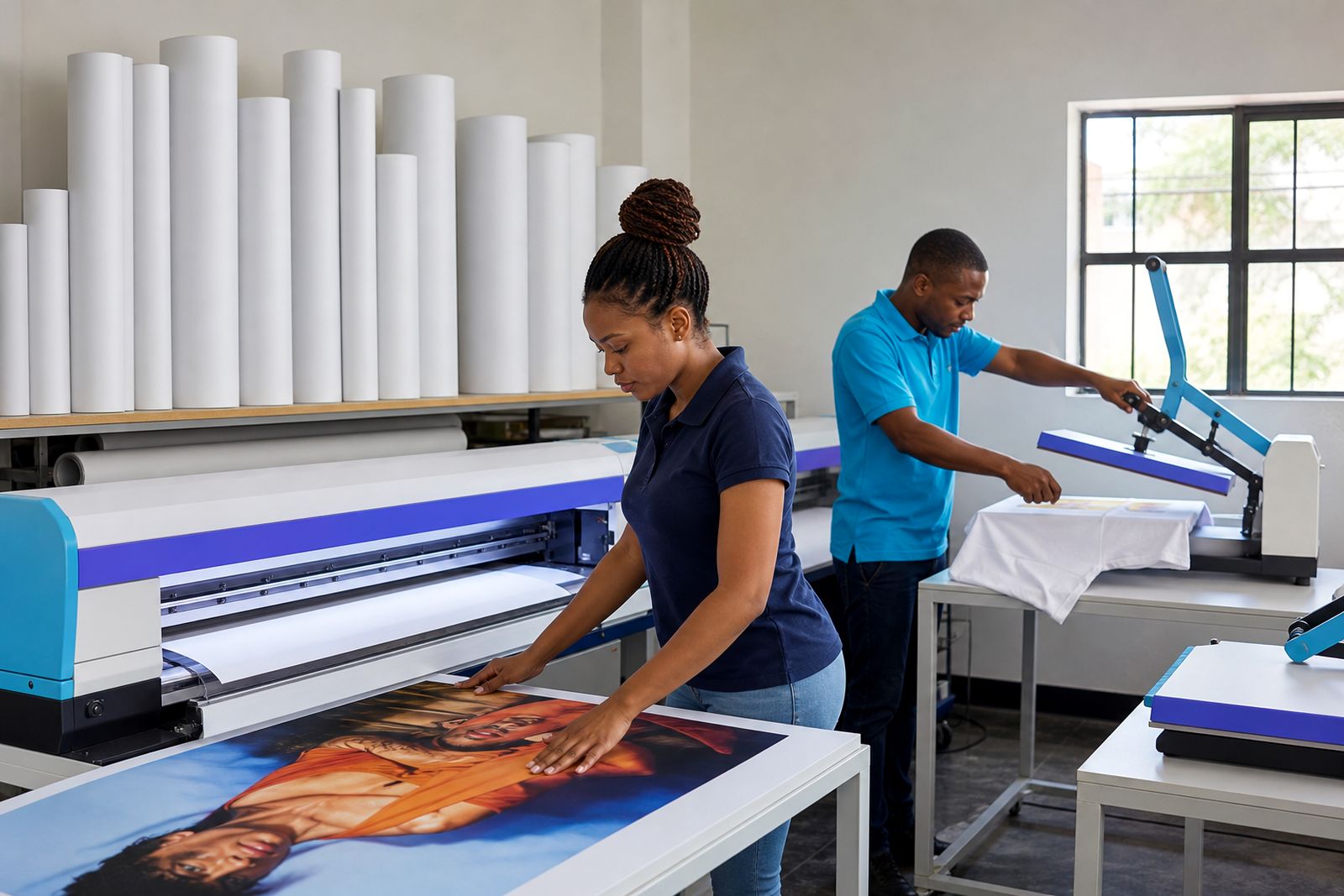
Built for wide-format transfer work
Roll media suits production where artwork runs longer than standard sheet lengths, where panels need clean alignment, or where a workshop wants fewer paper changes during the day. We supply sublimation paper rolls for businesses and creatives in Pinetown, Durban, Gauteng, the Western Cape and the rest of South Africa, with options chosen around transfer behaviour rather than marketing labels.
Our range covers fast-dry grades for steady output, tacky paper for stretch textiles, and heavier paper where a firmer sheet body helps on certain jobs. We sell the paper and related consumables only. We do not print for the public and we do not sell printers.
How roll paper is usually chosen
The right roll often comes down to three practical points: the width your equipment can take, the paper weight that suits the image load, and whether the fabric moves during transfer. A sportswear workshop may need tack to keep registration in place, while a décor studio printing flatter textiles may prefer a freer release and quicker handling between prints.
- Width matters first because it sets what layouts you can run without waste.
- Paper weight affects stability, ink hold and how the roll feeds on longer runs.
- Drying speed becomes important when output is continuous and sheets are handled soon after printing.
- Tack helps on stretch fabrics where image shift can show as a soft shadow.
If you already know your usual transfer temperatures and fabric types, that information helps narrow the choice quite a bit.
Comparing the main roll options
Each grade is aimed at a slightly different production pattern. None is universally best. The useful question is what happens in your own workflow between printing, handling and pressing.
- Fast-dry 100 gsm roll: a good fit where printed paper moves quickly from printer to press and workshops want crisp handling without stepping up to a heavier grade.
- Tacky paper for stretch fabric: suited to polyester knits, performance wear and other materials that can shift during transfer. The light adhesive action helps reduce ghosting from movement.
- Heavyweight 120 gsm roll: often chosen where a firmer paper body is preferred for longer runs, denser coverage or a sligthly more planted feel through the feed path.
For many textile jobs, 100 gsm is the everyday starting point. Where stretch and movement are the issue, tack matters more than extra paper weight. Where handling feel and feed stability matter most, 120 gsm can make sense.
Roll width, waste and repeat jobs
Wide-format buying is not only about the paper itself. Roll width affects nesting, offcut waste and whether repeated artwork sizes fit cleanly across the web. A paper that performs well can still cost more per finished piece if layouts leave too much unused edge.
Studios doing flags, fashion panels or cut-and-sew components often work this out by matching common panel widths to the nearest roll size, then checking whether artwork repeats leave a narrow salvage strip or a large unused band. That small planning step can save metres over a week, especially on regular runs.
If you send your typical panel size, press format and whether the work is continuous or stop-start, we can point you to the most sensible roll type in the range.
Protective layers still matter on roll jobs
Even the right transfer paper will not do the whole job on its own. Protective and release papers help keep presses cleaner, reduce strike-through onto blankets and limit the marks that build up when production is repetitive. On long runs that housekeeping side is easy to ignore at first, then it starts showing on finished work.
- Use protective tissue where ink or coating residue may transfer onto press surfaces.
- Use release material where separation and cleaner lift-off are more important than absorption.
- Replace marked protective layers before residue starts echoing onto the next batch.
You can pair your roll order with protective sheets or related consumables through the same enquiry process.
Ordering from Pinetown for delivery nationwide
Our base is in Pinetown, with courier delivery arranged to Durban, Gauteng, the Western Cape and every other province. When sending an enquiry, it helps to include the roll grade you are considering, your preferred width, approximate quantity and the material you transfer onto most often.
If you are weighing up two options, say what is giving trouble now, such as slow drying, fabric movement or paper feel on long runs. That makes the recommendation more useful and keeps the order closer to your actual workshop conditions not just a generic paper spec.
Explore the range
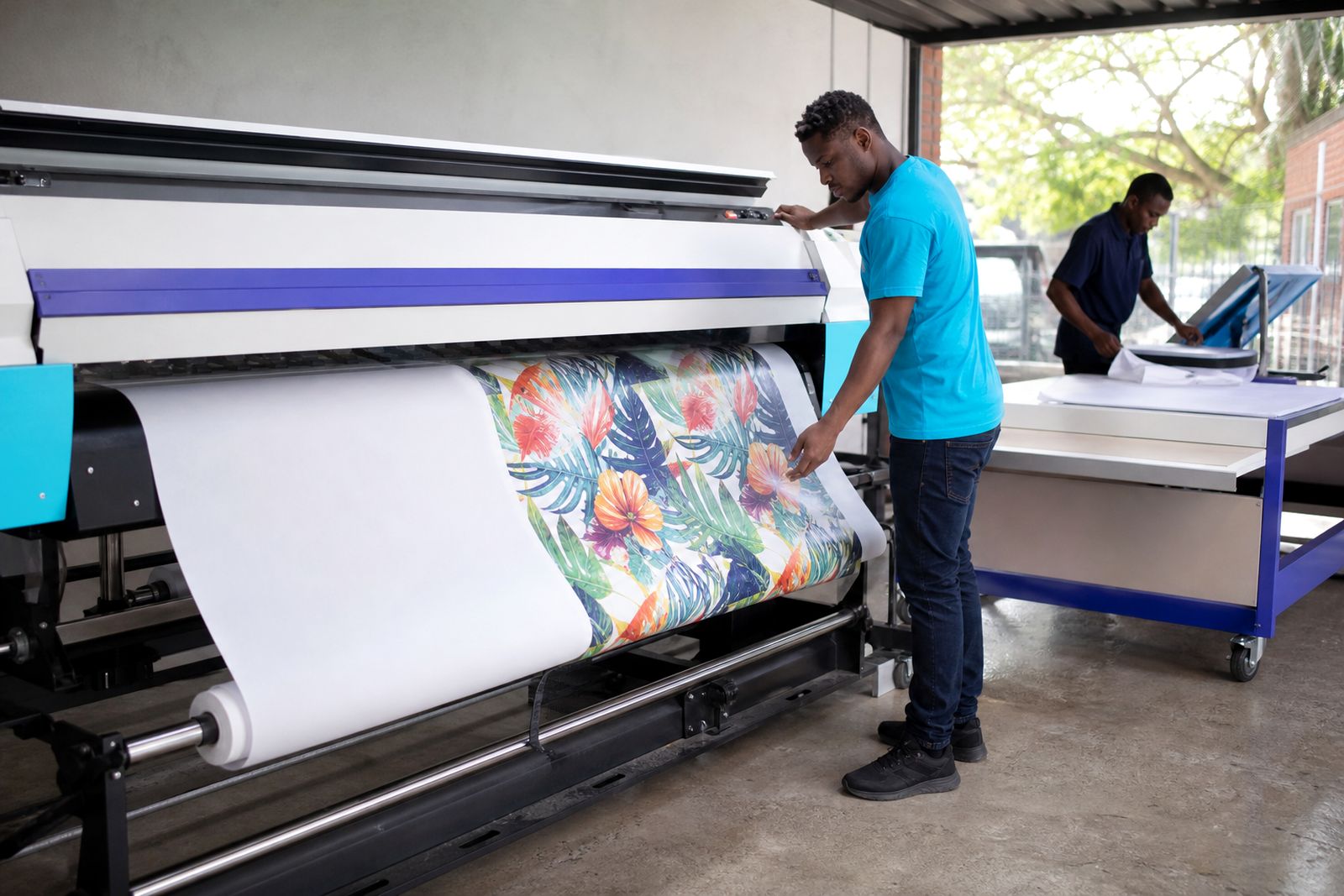
Fast-dry 100 gsm roll
A versatile 100 gsm roll for wide-format sublimation lines that need speed, clean release and dependable daily handling.
Read more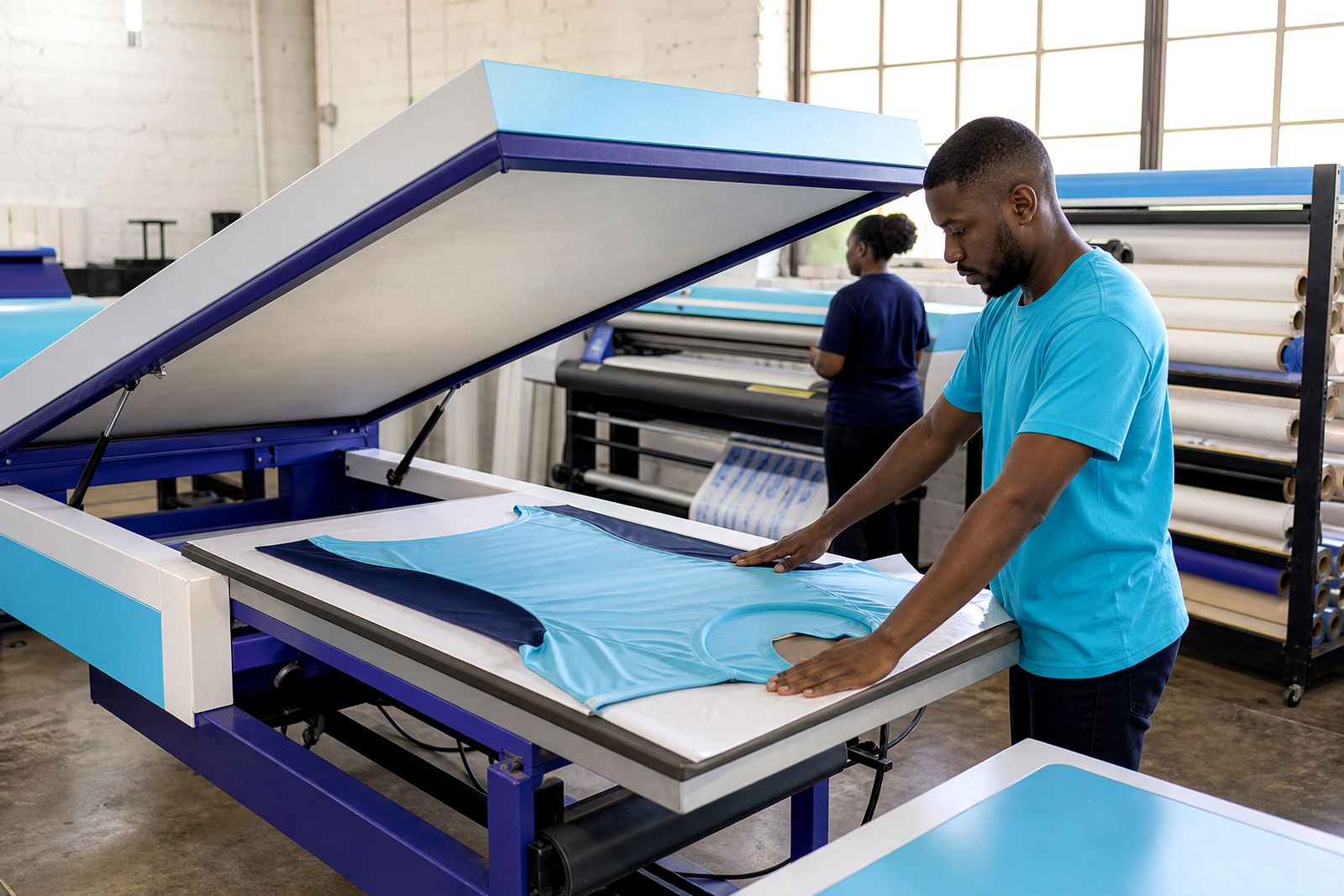
Tacky paper for stretch fabric
Sticky-backed sublimation paper for stretch textiles that need steadier placement during pressing.
Read more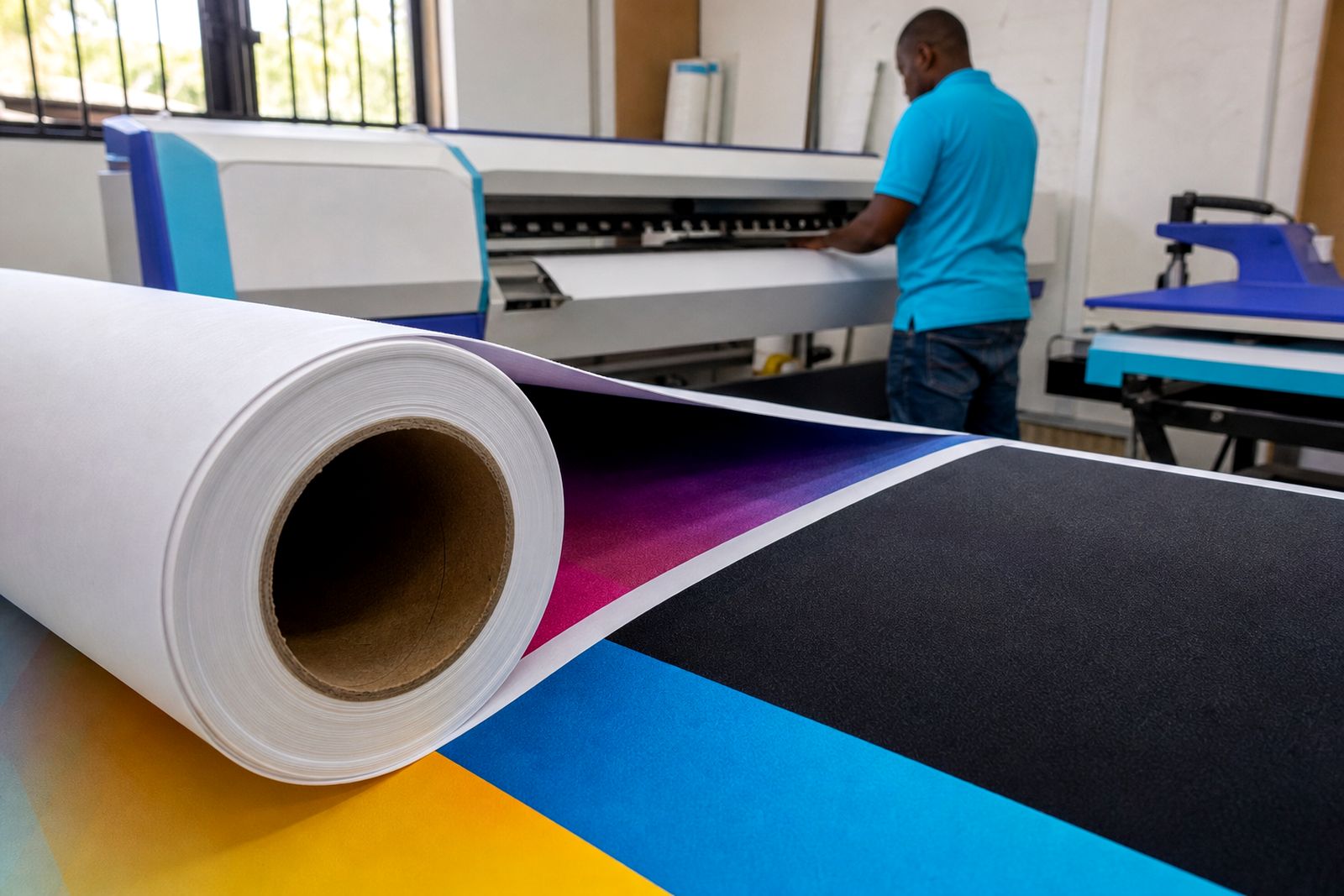
Heavyweight 120 gsm roll
A heavier transfer roll for darker prints, stronger coverage and steadier running on wide-format jobs.
Read moreWhat our Sublimation customers say
Verified Google reviews
Questions we get asked
What is the difference between fast-dry and tacky sublimation paper?
Fast-dry paper is aimed at quicker handling after printing, while tacky paper adds light grip during transfer to help control movement on stretch fabrics.
Is 120 gsm always better than 100 gsm?
Not always. A heavier paper can feel more stable on some runs, but many everyday textile jobs work well on 100 gsm when drying and transfer conditions are already controlled.
Can I order rolls if I am outside KwaZulu-Natal?
Yes. We work from Pinetown and arrange courier delivery to Durban, Gauteng, the Western Cape and all other provinces.
Tell us about the job
Send sizes, materials and where you are through our contact form, and we will come back with the practical options.
Open the contact form