

Sublimation guides
These guides cover the paper and protection choices that affect transfer quality, handling and press results. They are written for South African print rooms, studios and clothing teams that need plain advice before they order.
How this guide section helps
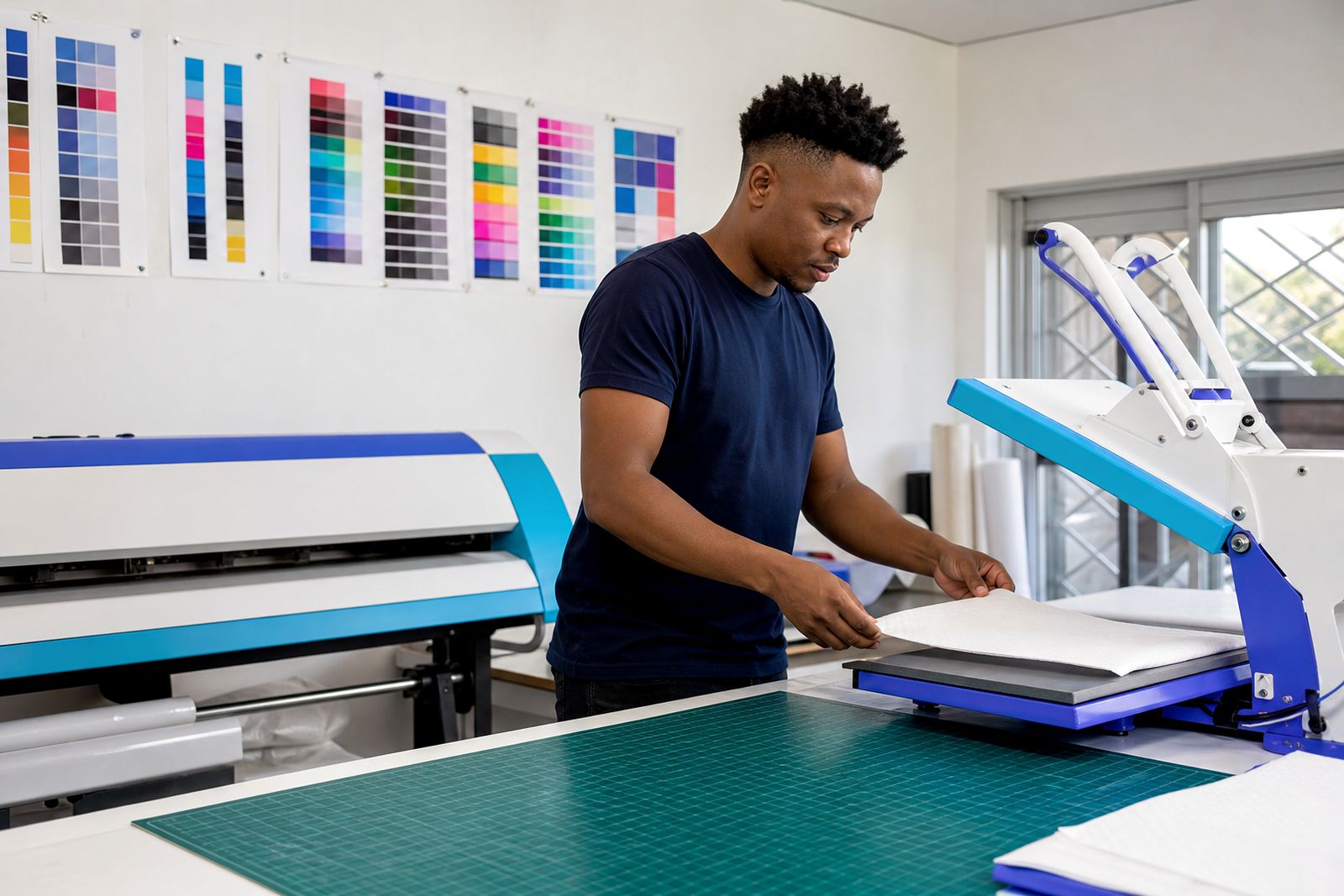
Our guide pages focus on the parts of sublimation work that usually cause waste: the wrong paper weight, poor sheet handling, ghosting on the press and colour shifts between one run and the next. Rather than broad theory, this section deals with consumables and the way they behave on actual jobs.
You will find notes that relate to roll work, cut sheets, transfer stability and protection between the transfer paper, fabric and heat press surfaces. We sell paper and related consumables only. We do not print for the public and we do not sell printers, so the advice here stays on material choice, handling and pressing conditions.
Choosing between rolls, sheets and protective stock
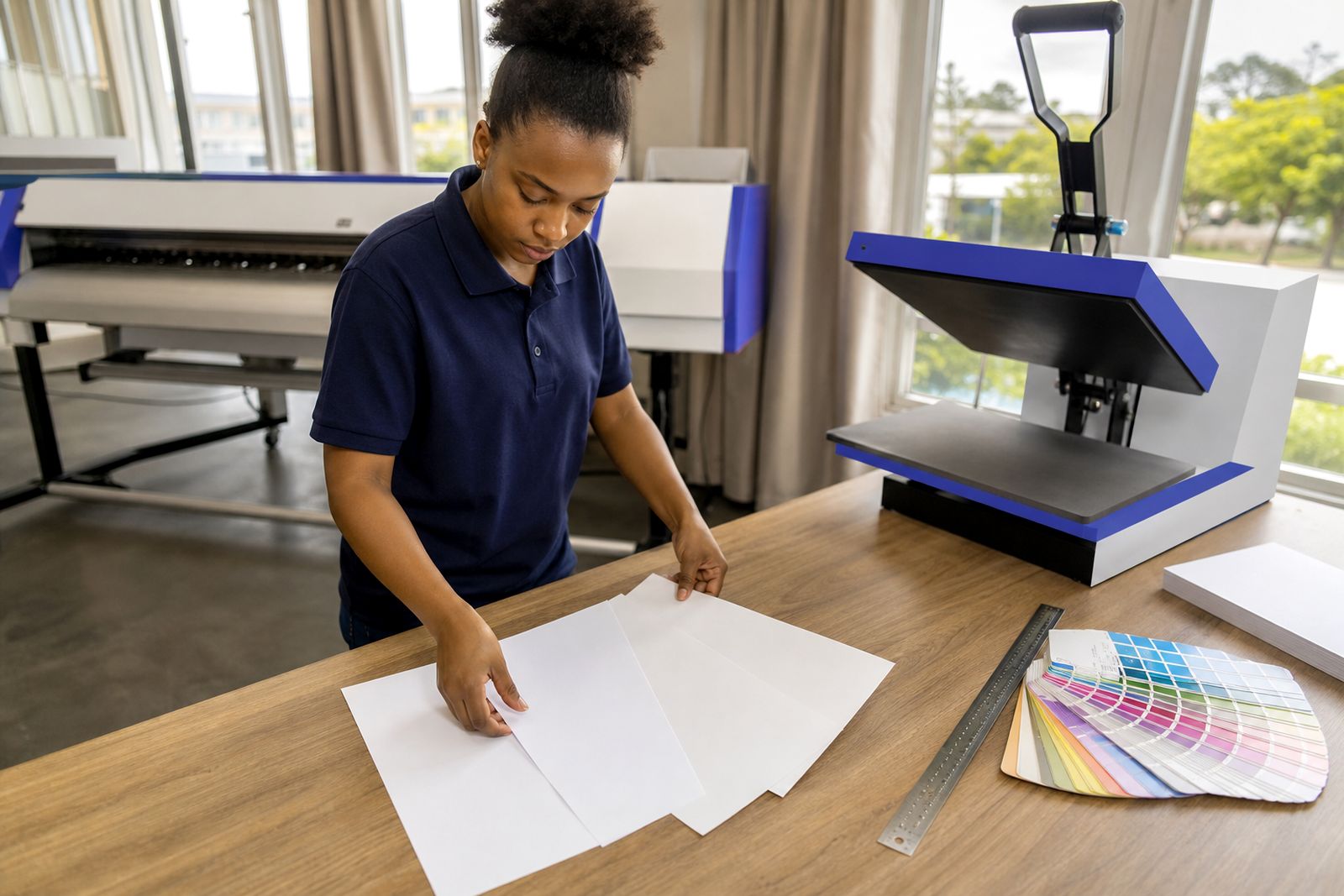
The best format depends on how you print, how you trim and what goes through the press most often. A small studio running short artwork batches may want sheet stock for easy loading and filing, while a production line making repeated lengths for garments or soft signage will usually lean toward rolls.
- Roll paper suits longer runs, repeated artwork and wide-format output where keeping the feed consistent matters.
- Sheet paper suits smaller printers, short-run sampling and jobs where different artworks change often through the day.
- Tacky paper helps hold position on stretch fabrics that tend to move when heat is applied.
- Protective tissue and release sheets help keep ink, coating residue and lint away from press surfaces and finished goods.
When you compare options, think about the full press cycle and not only the print stage. A cheaper paper can cost more if it curls in humid weather or shifts during transfer, and that shows up quickly in Pinetown summers where the air can feel heavy before rain.
Paper weight makes a noticeable difference
Paper weight affects ink load, drying behaviour, handling stiffness and how confidently the sheet or roll moves through production. Lighter stock can be useful where dry-down and easy release matter, while a heavier stock can give steadier handling on certain equipment and larger formats.
- Fast-dry 100 gsm is often chosen where print flow is busy and jobs need a cleaner hand-off from printing to pressing.
- Heavyweight 120 gsm can feel more stable on larger work and where operators prefer a firmer paper during alignment.
- A4 and A3 sheets suit smaller format output and test work without cutting down a full roll.
There is no single paper for every substrate. Polyester apparel, panels and promotional items can each respond differently depending on coating, pressure and dwell time, so the better choice is the one that gives repeatable release and colour on your own setup.
Pressing points that reduce ghosting and rework
Ghosting rarely comes from one cause on its own. It is usually a combination of sheet movement, uneven pressure, fabric lift or extra handling while the transfer is still hot. A steady setup matters more than rushing the close-and-open cycle.
Protective material helps here because it creates a cleaner layer between the transfer and the press. It also limits stray ink marking blankets, platens or neighbouring items on gang work.
- Use a protective sheet that matches the job rather than reusing marked stock too long.
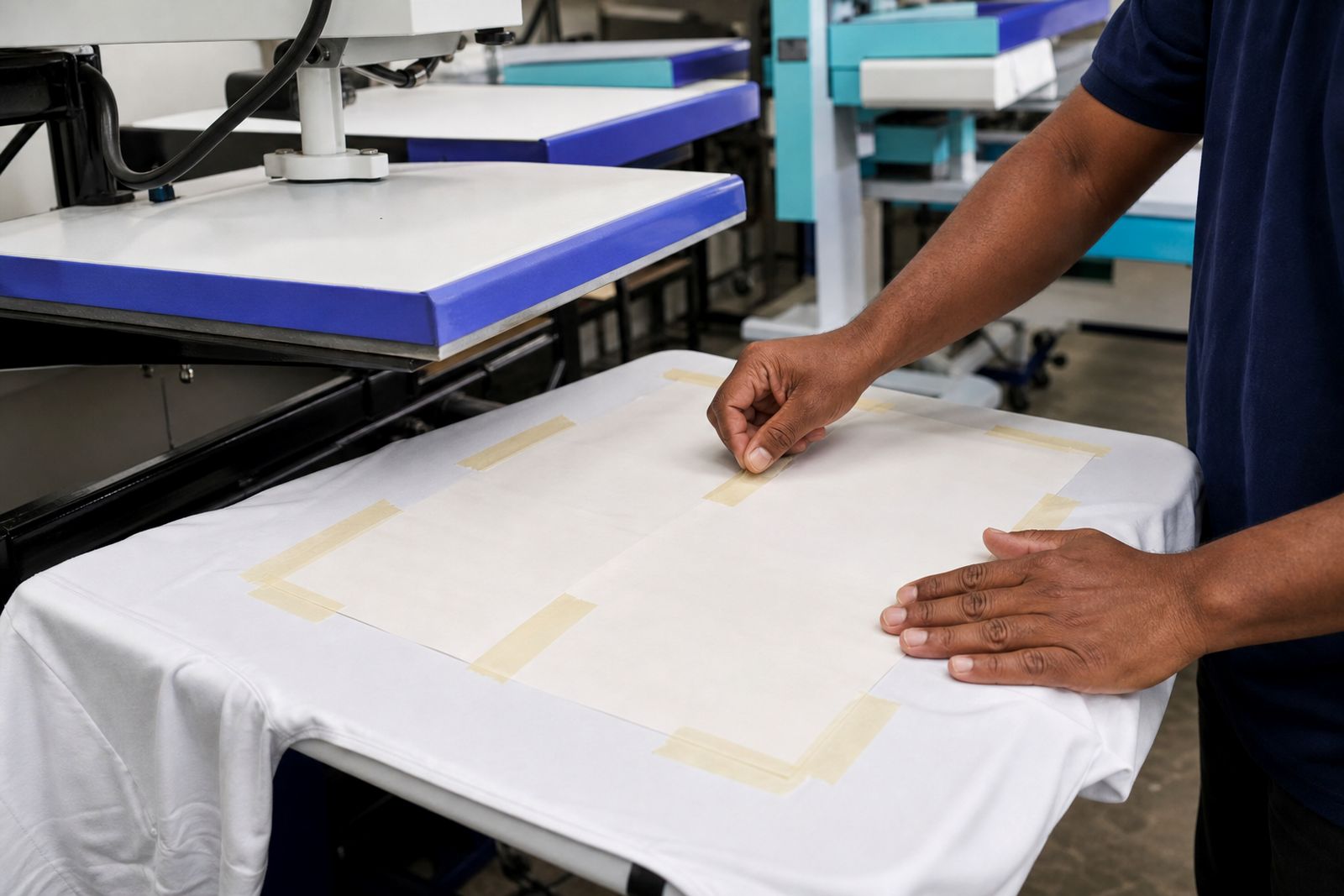
- Keep the transfer secure before closing the press especially on stretch items.
- Check pressure across the full area, not only the centre.
- Let hot items settle before lifting or stacking if movement has been a problem.
Small changes help. An operator can chase colour for half a day when the real fault is paper slip on opening, or a contaminated protective layer that has already picked up ink from a previous press cycle.
Colour handling starts before the press
Bright, lasting output depends on more than the artwork file. Paper coating, ink release, drying condition and moisture all affect the transfer result before the substrate even reaches heat. If colour looks dull or inconsistent, it is worth checking material handling first and not assuming the artwork is wrong.
Keep rolls wrapped when not in use and store sheets flat in a clean area. In coastal conditions around Durban, paper can take on moisture more quickly than inland stockrooms do, which can show as cockling, softer edges or less predictable release. Clean handling and sensible storage are boring topics, but they save waste.
Using these guides before you place a material order
This section is arranged to help narrow the choice between paper weights, tacky options and protective layers without overcomplicating the decision. If your work is mostly fashion panels, stretch garments or repeated roll production, start with the pages on paper type. If press marks, offset ink or ghosting are the real issue, start with the protection and troubleshooting notes.
When you are ready to ask about stock, include your format, approximate width or sheet size, the substrate type and whether the work is short-run sampling or ongoing production. That makes it easier to point you toward a paper and protection combination that fits the job. Orders and stock questions can be sent through our contact form.
What our Sublimation customers say
Verified Google reviews
Questions we get asked
Do you sell sublimation printers or offer public printing?
No. We sell sublimation paper, protective and release papers and related consumables. We do not print for the public and we do not sell printers.
Should I use tacky paper for every fabric job?
Not always. Tacky paper is most useful where stretch fabric or light movement during pressing can affect image position. Stable substrates may not need it.
Which is better for me, sheets or rolls?
Sheets suit smaller format work, testing and frequent artwork changes. Rolls suit repeated production, longer runs and wide-format printing where continuous feed matters.
Tell us about the job
Send sizes, materials and where you are through our contact form, and we will come back with the practical options.
Open the contact form