

Fast-dry 100 gsm roll
Our fast-dry 100 gsm roll is a general-purpose sublimation paper for wide-format production where steady ink take-up and clean transfer matter. It suits print rooms running textile, panel and promotional work that needs good colour without moving to a heavier paper.
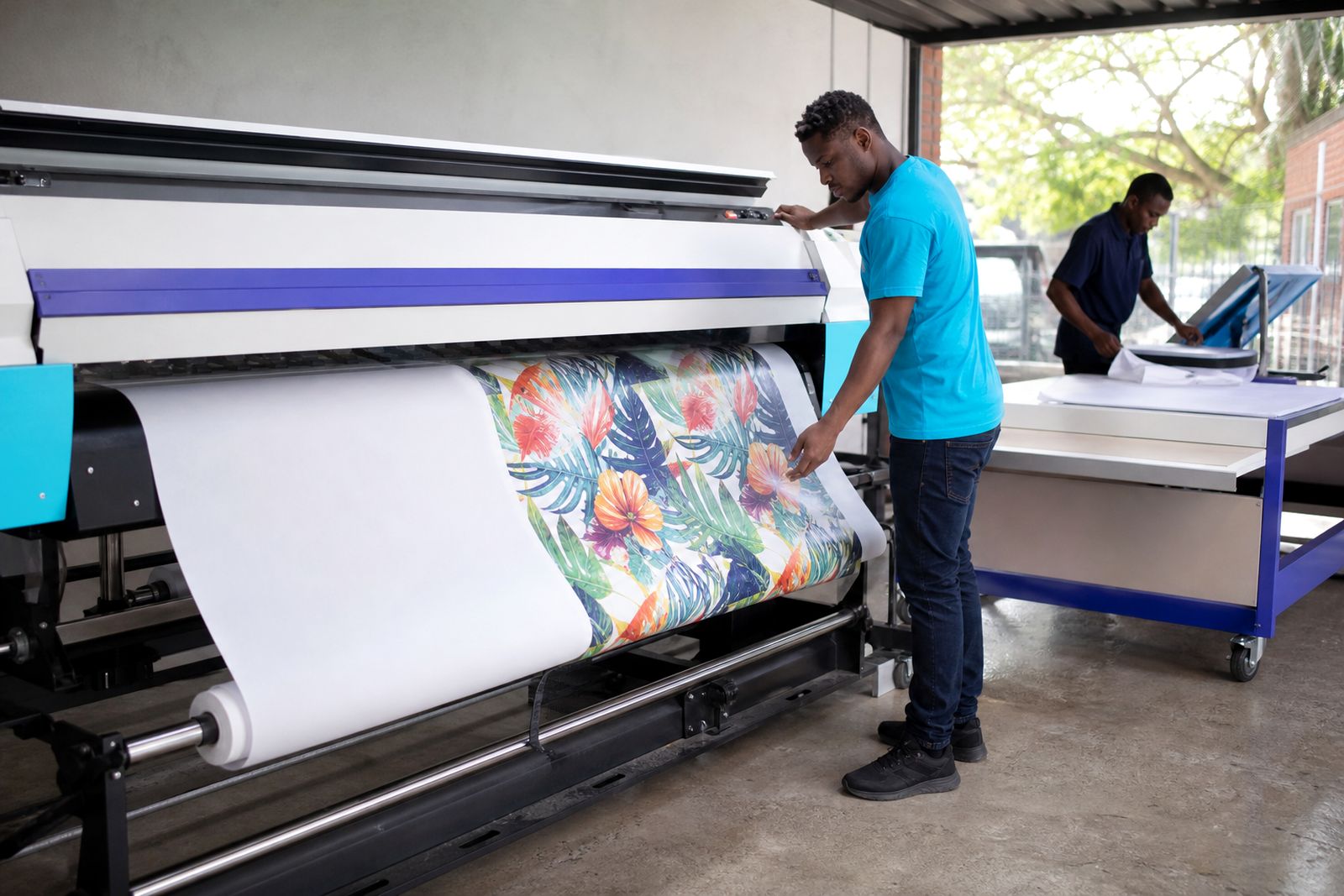
Built for everyday wide-format production
This grade sits in the middle of the range, which is why many studios use it as a regular working roll rather than a special-case stock item. At 100 gsm it is heavy enough to feed with confidence on most properly set wide-format machines, yet still responsive enough for faster print runs where drying on the take-up side matters.
The coating is intended for sublimation transfer inks and supports sharp printed detail, solid colour areas and repeat work across fashion panels, soft signage, sportswear components and promotional fabric pieces. In a busy room the main advantage is consistency. You are not fighting a flimsy sheet, but you are also not loading an overly stiff paper where a lighter grade would move through the printer more easily.
- General-purpose transfer paper for wide-format sublimation printing
- 100 gsm base weight for balanced handling and transfer performance
- Fast-dry surface for higher print speeds and reduced surface wetness
- Suitable for transfer work onto polyester and polyester-coated items
Roll widths, print limits and where this weight sits
We supply this product in roll format for wide-format equipment, with width and length options depending on your machine setup and production pattern. The best size is usually decided by the printer width, the fabric panel size and how much edge waste you can accept on each job. If you are nesting repeated garment parts, a slightly wider roll can reduce joins and offcuts.
Working limits matter. A fast-dry 100 gsm paper performs well across standard production densities, but like any transfer paper it still needs printer settings that match the ink load. If you push very heavy laydown on saturated blocks without proper drying control, you can still see cockling or surface moisture before transfer. On the other side, if your work is mostly light coverage and very high linear speed, a lighter sheet may be enough.
- Used on wide-format printers set up for sublimation transfer inks
- Best for normal to moderately high ink loads rather than extreme saturation
- Practical for continuous runs where paper tracking and drying need to stay stable
- Not the first choice where very tacky hold is needed on stretch fabrics
If you are uncertain about width, core size or roll length, send those details through our contact form with your current paper size and printer media range.
Jobs where it earns its place
This roll suits businesses producing day-to-day transfer work over mixed job types. It is a good fit where one paper needs to cover branded apparel panels, cushion covers, banners, display fabric and similar polyester applications without changing media every few hours. The sheet releases well after transfer and helps keep production steady when the room is moving from one order batch to the next.
It is less suited to specialised stretch-fabric work where paper movement during transfer is a known problem and a tackier grade is needed to hold placement. It is also not intended as a protective layer inside the heat press. You would pair it with the correct protective or release paper above and below the transfer setup where required.
For rigid coated blanks and flat panel work, many operators also like this weight because it handles cleanly during cutting and positioning. In humid coastal conditions around Durban and Pinetown, storing opened rolls correctly helps keep the edges flatter and the feed more predictable, which is a small thing but it makes a real difference on long runs.
Printer setup, room conditions and loading notes
You do not need unusual site preparation for this media, but the printer must be in sound running condition with the media path set correctly for the paper thickness. Roll alignment matters more than many people expect. If the roll is loaded slightly off, tracking drift can show up long before the printed image reaches the transfer stage.
Keep the print room reasonably clean and dry. Sudden moisture pickup can affect curl and can slow surface drying a littel, especially after a roll has been left open overnight near a doorway or unsealed window. In coastal air, it is worth re-bagging partly used stock and keeping cartons off the floor.
- Check that the take-up system is tensioned properly for paper rolls
- Match heater and pass settings to your normal ink load
- Allow the roll to settle to room conditions before long production runs
- Use a clean blade or cutter to avoid ragged edges at loading
This page covers paper only. We do not sell printers and we do not print for the public.
Handling, storage and day-to-day care
Good transfer results start long before the press cycle. Store rolls in their wrapping until needed, away from direct sun, dust and damp corners of the workshop. Once opened, keep the roll protected when not in use. Paper that has picked up moisture can still print, but you may see more waviness, slower dry-down or less tidy feeding at the edges.
During use, avoid squeezing the roll ends or resting them on dirty surfaces. Finger marks, oil and workshop dust can all show up later during transfer in ways that waste fabric and time. If you cut lengths from the roll for panel work, keep them flat and covered rather than leaving them loose near the press area.
- Store sealed where possible in a cool, dry indoor area
- Keep opened rolls wrapped between production shifts
- Protect from humidity swings and direct heat sources
- Handle edges cleanly to reduce contamination before transfer
Details to send when you ask about this roll
To point you to the right width and quantity, we need a bit of practical information rather than only the paper name. The more accurate your operating details are, the easier it is to match the roll to the machine and the kind of work moving through your print room.
Please include your printer width, the roll size you use now, the type of products you transfer onto and whether your jobs are mostly light graphics, solid blocks or high-coverage textile panels. If there are issues with curl, drying or ghosting, mention that too. We can then guide you toward this 100 gsm option or, if your application leans another way, a different paper in the range.
- Required roll width and approximate roll length
- Printer make-up such as media width range and core size
- Main application, for example sportswear, soft signage or coated blanks
- Typical ink coverage and production volume
- Your delivery town, whether Pinetown, Durban, Gauteng, the Western Cape or elsewhere in South Africa
Send those points through our contact form and we will help you narrow it down properly.
What our Sublimation customers say
Verified Google reviews
Questions we get asked
Is 100 gsm a good all-round sublimation paper weight?
Yes. For many wide-format setups it offers a useful balance between feed stability, drying behaviour and transfer performance, especially across mixed daily work.
Can I use this roll for stretch fabric?
It can be used on some stretch applications, but where movement during transfer is a problem a tacky paper is often the better choice.
Do you sell printers with this paper?
No. We sell sublimation paper, protective and release papers and related consumables only.
Tell us about the job
Send sizes, materials and where you are through our contact form, and we will come back with the practical options.
Open the contact form