

Tacky paper for stretch fabric
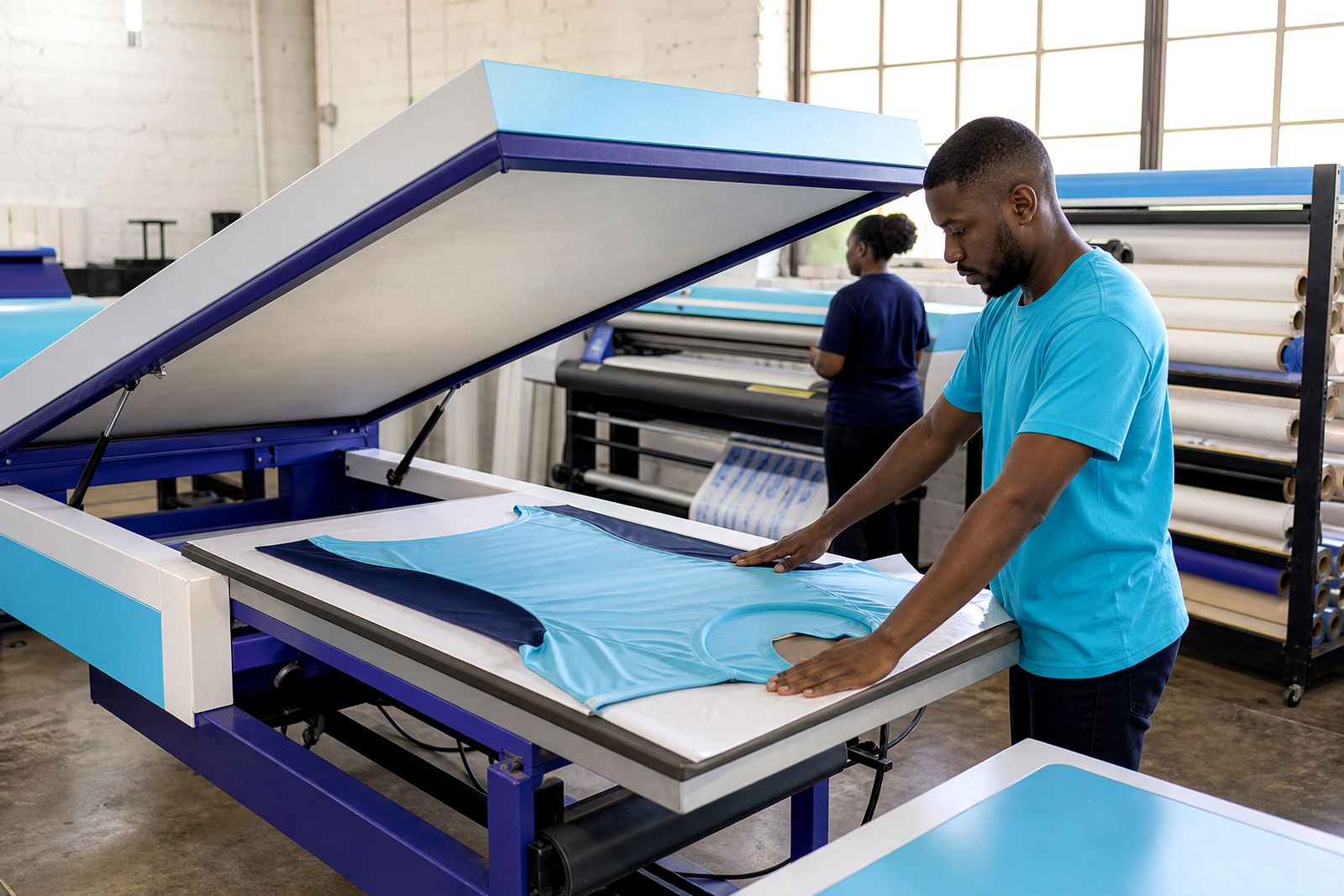
Tacky sublimation paper helps hold stretchy polyester fabric in place while heat and pressure do the transfer work. It is a practical choice for sportswear panels, leggings and other cut pieces that tend to shift in the press.
What this paper is doing differently
This grade carries a light tack that becomes useful when fabric wants to creep, lift or spring back under heat. On stretch textiles, especially knitted polyester used for cycling tops, teamwear and leggings, that small amount of hold can reduce movement between the printed transfer and the garment panel.
The tack is not there to glue the fabric down permanently. It is there to keep registration steadier through the press cycle so fine outlines, numbers and edge detail do not double up as easily. In a busy production room that can save spoiled panels and a fair bit of trimming frustration.
- Made for sublimation transfer onto polyester stretch fabric.
- Light tack helps reduce fabric movement during pressing.
- Useful where ghosting is linked to panel lift or fabric recoil.
- Sold as paper only. We do not sell printers or offer public printing.
Roll widths, lengths and working limits
Tacky paper is usually chosen by the roll because sportswear runs often need long print lengths and repeatable feeding through a wide-format printer. The best width depends on the printer carriage, take-up setup and the cut size of the panels you are producing. Narrower widths can be easier to keep flat in smaller rooms, while wider rolls make better sense for bulk layouts.
For most transfer work, the paper should stay flat, release cleanly and dry fully before it is stacked or taken to press. Heavy ink loads and damp coastal conditions around Durban can slow drying, so room handling matters just as much as paper choice. If your transfer has very large solid blocks, tell us that upfront because tacky grades need to match the ink laydown and production speed.
- Common use: roll-fed wide-format sublimation printing.
- Suitable for cut panels and garment parts rather than random mixed jobs.
- Works best when printing, drying and pressing are consistent.
- Not every printer feed path handles every roll width equally well.
Where it suits the job floor
This paper earns its place when the fabric itself is the problem. Stretch jerseys, elastane blends and lightweight knits can move when they meet the paper in the press, particularly on shaped pieces with curves and narrow points. A tacky surface helps keep those pieces from skating out of line.
Typical uses include teamwear panels, running vests, compression garments, swim-related polyester items and fashion cut pieces where alignment must hold over seams, hems or close trim lines. It also helps on smaller pieces that operators place by hand where every millimetre counts a bit more than usual.
- Sportswear panels with high stretch.
- Leggings and compression wear.
- Light knitted polyester with recoil.
- Cut pieces where edge registration matters.
- Repeated production where operators need steadier placement.
Where a standard paper may be the better choice
Tacky paper is not the answer for every textile run. If you are pressing stable woven polyester, flags, rigidly cut fabric or items that are already secured well by the press setup, a standard fast-dry sublimation paper may be simpler and more economical. The tack can be unnecessary on jobs that already sit flat and behave well.
It is also not ideal to treat tacky paper as a fix for poor temperature control, damp stock, over-inking or dirty press blankets. Those issues need attention in their own right. Where transfer blur comes from excessive gas spread, weak paper drying or pressure imbalance, switching to a sticky sheet on its own will not sort the root problem.
If you are uncertain whether movement is coming from the fabric or from the press cycle, send the job details through our contact form and include the fabric type, transfer size and your current paper weight.
Press setup, room conditions and handling
You do not need special premises for this paper, but the way the room is run does make a difference. Keep rolls wrapped until use, avoid dusty storage, and let the media settle to room conditions before loading. In Pinetown and the coast, humidity swings can affect curl, drying and feed stability, more so on wider rolls.
On the press side, even pressure across the platen matters because uneven contact can let one edge move before the rest of the panel is pinned by heat. Clean protective sheets and a stable press cycle help the tack perform as intended. Operators should test release on a short run before committing a full batch, just to make sure the fabric face and print load are behaving as expected.
- Store rolls upright or supported to prevent edge damage.
- Keep them sealed away from damp air and workshop dust.
- Allow printed transfers to dry fully before stacking.
- Check pressure balance across the platen on wider panels.
- Use clean protective material above and below when needed.
What to send when you ask about a roll
The most useful starting point is the fabric description and the printer width you are working with. Tell us whether the job is teamwear, leggings, swimwear or another stretch application, and mention whether you are seeing ghosting, fabric lift or feed issues. That gives a clearer picture than simply asking for sticky paper.
It also helps to know your usual paper weight, the approximate ink load, transfer size and whether you need rolls for short production runs or ongoing shop use. If there is a target roll width or metreage, include that as well. We can then point you to a tacky grade that fits the work rather than forcing a one-size answer that often wastes stock.
- Printer model and maximum media width.
- Fabric type and stretch level.
- Typical panel sizes or artwork coverage.
- Current paper weight and any transfer problems.
- Preferred roll width and length.
- Delivery town or province for courier planning.
What our Sublimation customers say
Verified Google reviews
Questions we get asked
Does tacky paper stop all ghosting?
No. It helps where ghosting is caused by the fabric moving in the press. If the problem comes from over-inking, poor drying, uneven pressure or temperature drift, those need to be corrected as well.
Can I use it for ordinary polyester garments?
You can, but it is usually most useful on stretch fabrics that shift easily. For more stable textiles a standard paper can be the cleaner and more economical option.
Do you sell this paper in sheet form?
This page covers the roll version for wide-format work. If you need smaller formats, have a look at our sheet ranges and send the job details through our contact form.
Tell us about the job
Send sizes, materials and where you are through our contact form, and we will come back with the practical options.
Open the contact form