Sublimation paper sheets
Our sublimation paper sheets cover the small-format work many studios and print rooms handle every day. This section helps you compare A4 and A3 sizes for mugs, tiles, panels and other compact items.
Sheet paper for small-format sublimation
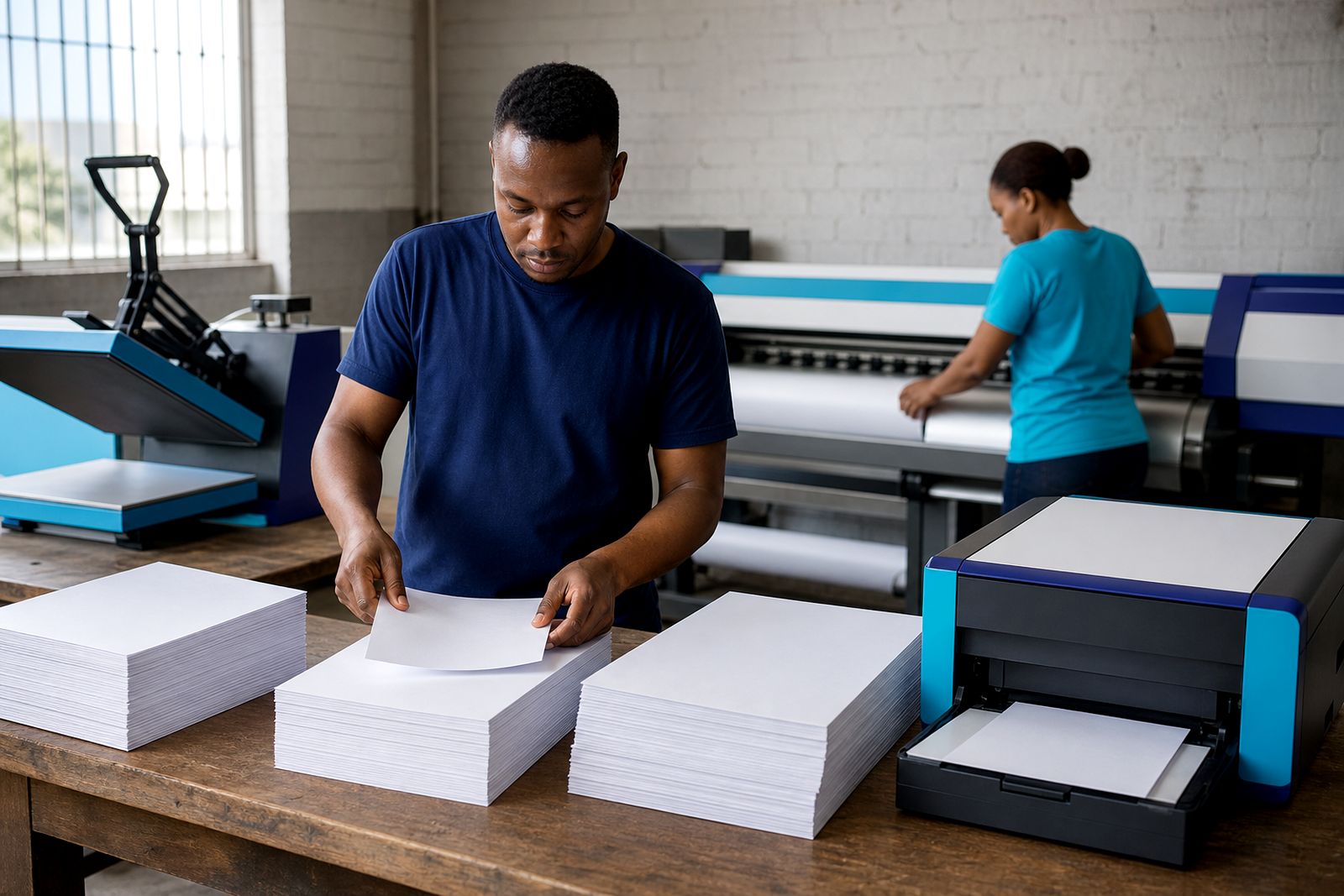
Sheet-fed sublimation paper suits jobs where a roll is unnecessary or awkward to load. Many desktop sublimation setups in Pinetown and Durban run most neatly on cut sheets, especially for mugs, coasters, tiles, photo panels and sample pieces where artwork changes often.
We supply sublimation paper sheets for transfer printing only. We do not print for the public, and we do not sell printers, so this section stays focused on the paper itself and how it behaves in day-to-day production.
If your work is built around short runs, mixed artwork and regular operator checks, sheets usually make handling easier. They also help keep stock simple when a studio is producing small gift lines rather than long textile lengths.
A4 or A3: where each size fits best
The right sheet size depends on the printable area you need, the printer you already run and how much trimming you want on the bench. A4 is common for compact items and test output, while A3 gives more room for larger layouts or multiple repeats on one sheet.
- A4 sheets suit mugs, coasters, phone covers, small plaques and test prints.
- A3 sheets suit larger tiles, mouse pads, slim panels and gang-printing several smaller transfers together.
- A4 is easier to store in tighter offices or studios with limited shelving.
- A3 can reduce paper changes during a run, which helps when you are batching artwork.
- If your printer only accepts one format, that machine spec settles the choice quickly.
For many operators the decision is practical rather than technical. If you need fast artwork swaps and compact storage, A4 often makes sense. If you want fewer sheets passing through the printer each shift, A3 may be the tidier option.
Jobs that usually run well on sheet stock
Cut-sheet sublimation paper is often chosen for rigid blanks and smaller customised goods. The sheet stays flat, is easy to align on the work surface and is simple to pair with protective layers during pressing.
- Mug wraps and paired mug sets with repeat logos.
- Ceramic tiles for décor pieces or memorial panels.
- Small aluminium or coated metal inserts.
- Coasters and hardboard gift items.
- Sampling before a longer production run on another substrate.
Where artwork is changed often, sheets can be less fussy than cutting lengths from a roll. For a busy shop that handles one-off names, event items and sample approval pieces, that matters more than people think.
Paper handling that keeps transfers clean
Good paper can still produce poor transfers if it picks up moisture, oil from hands or damage along the feed edge. Coastal humidity around Durban does affect paper behaviour, especially if packs are opened and left exposed near a press area.
Store sheets flat in their wrap or in a clean dry drawer. Keep the print side consistent through the workflow, and avoid mixing opened packs from different jobs on one table. When loading desktop printers, fan the stack lightly if needed but do not crease corners or thumb the printable face.
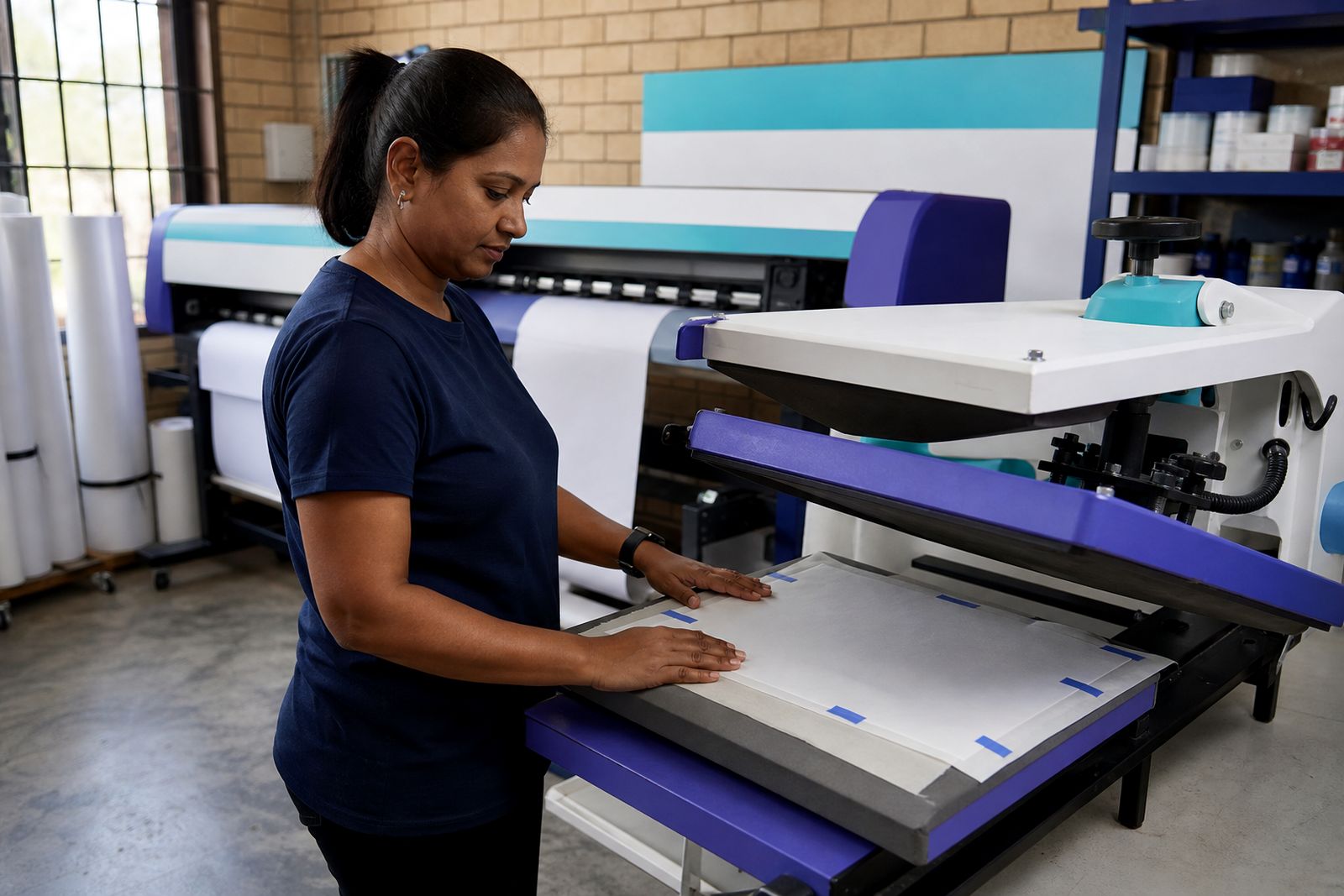
Protective sheets also play a part here. During pressing they help keep excess ink, vapour marks and contamination away from the heat press platen and from the next item in the run. That small habit saves waste, and it keeps production cleaner over time.
Comparing sheet work to roll work
Some buyers arrive here knowing they need sheets, while others are choosing between this section and our roll range. The better option depends on output volume, substrate size and the way your print room is set up.
- Choose sheets when your work is mostly mugs, tiles and compact blanks.
- Choose sheets when artwork changes often and jobs are short.
- Choose rolls when you are printing longer lengths for cut panels or textile production.
- Choose rolls when wider layouts would waste too much space on cut sheets.
- Choose sheets when bench space is limited and operators need quick pack access.
There is no single best format for everyone. A home studio in Gauteng making personalised mugs has different needs from a Western Cape production team pressing repeated panel graphics all week, so the paper format should match that real workflow.
Choosing your next pack
If you already know your printer size, your normal substrate size and whether you batch multiple images on one page, the choice is usually straightforward. Start with the sheet size your printer feeds reliably, then match the paper to the kind of transfers you produce most often.
Our A4 and A3 sheet pages take you into the individual options in more detail. If you need help narrowing it down between small rigid items, testing, or routine giftware output, send the job details through our contact form and we can point you to the most suitable paper in this section.
What our Sublimation customers say
Verified Google reviews
Questions we get asked
Do you sell A4 and A3 sublimation paper sheets?
Yes. This section covers A4 and A3 sublimation paper sheets for desktop printing and small-format transfer work.
Are these sheets suitable for mugs and tiles?
Yes, sheet paper is commonly used for mugs, tiles, coasters and other compact sublimation items where roll paper would be unnecessary.
Do you offer printing or printers as well?
No. We sell sublimation paper, protective and release papers and related consumables only.
Tell us about the job
Send sizes, materials and where you are through our contact form, and we will come back with the practical options.
Open the contact form