

Protective and release paper
Protective sheets do more than catch stray ink. The right paper helps keep the press clean, reduces ghosting and stops unwanted transfer marks on fabric, garments and cut panels.
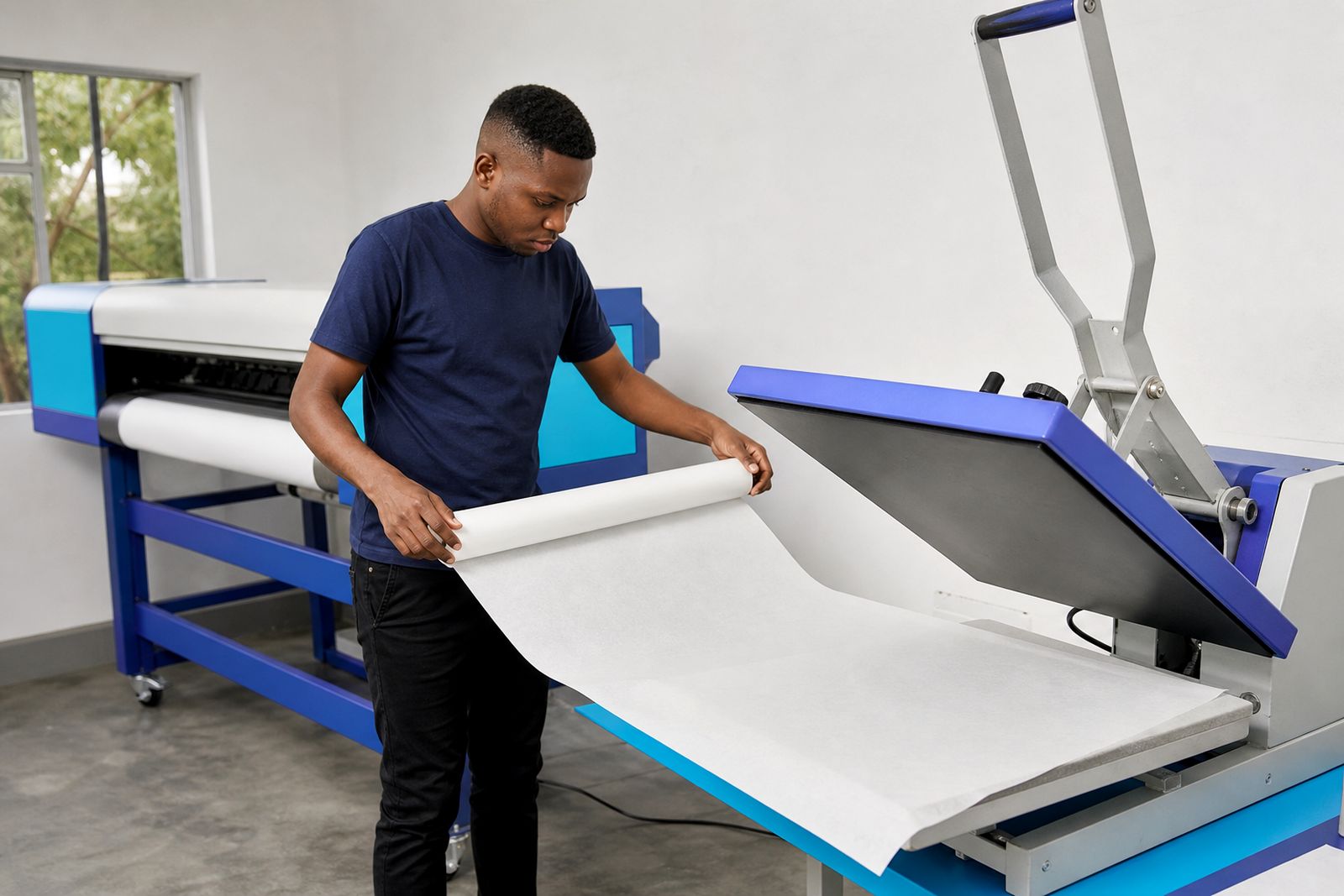
A cleaner layer between the transfer and the press
In sublimation work, the paper above and below the print matters almost as much as the transfer itself. A proper protective layer takes overspray, loose ink and residue before it reaches the heat press blanket, top platen or work surface. That keeps repeat jobs more consistent and cuts down on the faint marks that show up later on pale fabrics.
We stock protective and release papers for wide-format production, short runs and regular garment pressing. These materials are for print rooms, studios and production teams that already run their own presses. We do not print for the public and we do not sell printers.
Where protective paper makes a visible difference
Ghosting and transfer bleed often start with movement, moisture or leftover ink from a previous cycle. Protective paper helps by separating layers cleanly and by catching contamination before it can transfer onto the next item. On polyester sportswear, flags and soft signage it can save a lot of spoiled metres over a busy week.
- Placed above the transfer, it helps stop ink from reaching the upper press surface.
- Placed below the fabric, it can stop strike-through from marking the blanket or lower bed.
- Between repeated pressings, it helps keep lint, coating residue and loose dye off the next item.
- On cut pieces, it adds a cleaner barrier when edges are close to printed areas.
If you work with high-coverage prints or deep colours, this layer becomes even more useful. Dark solids and heavy ink loads tend to show any press contamination very quickly, especialy on the next lighter job.
Protective tissue roll or silicone release sheets
The best choice depends on how you press, how often you change jobs and whether you need a disposable barrier or a release surface that handles repeated cycles well. Both options help keep the press area tidier, but they behave differently under heat.
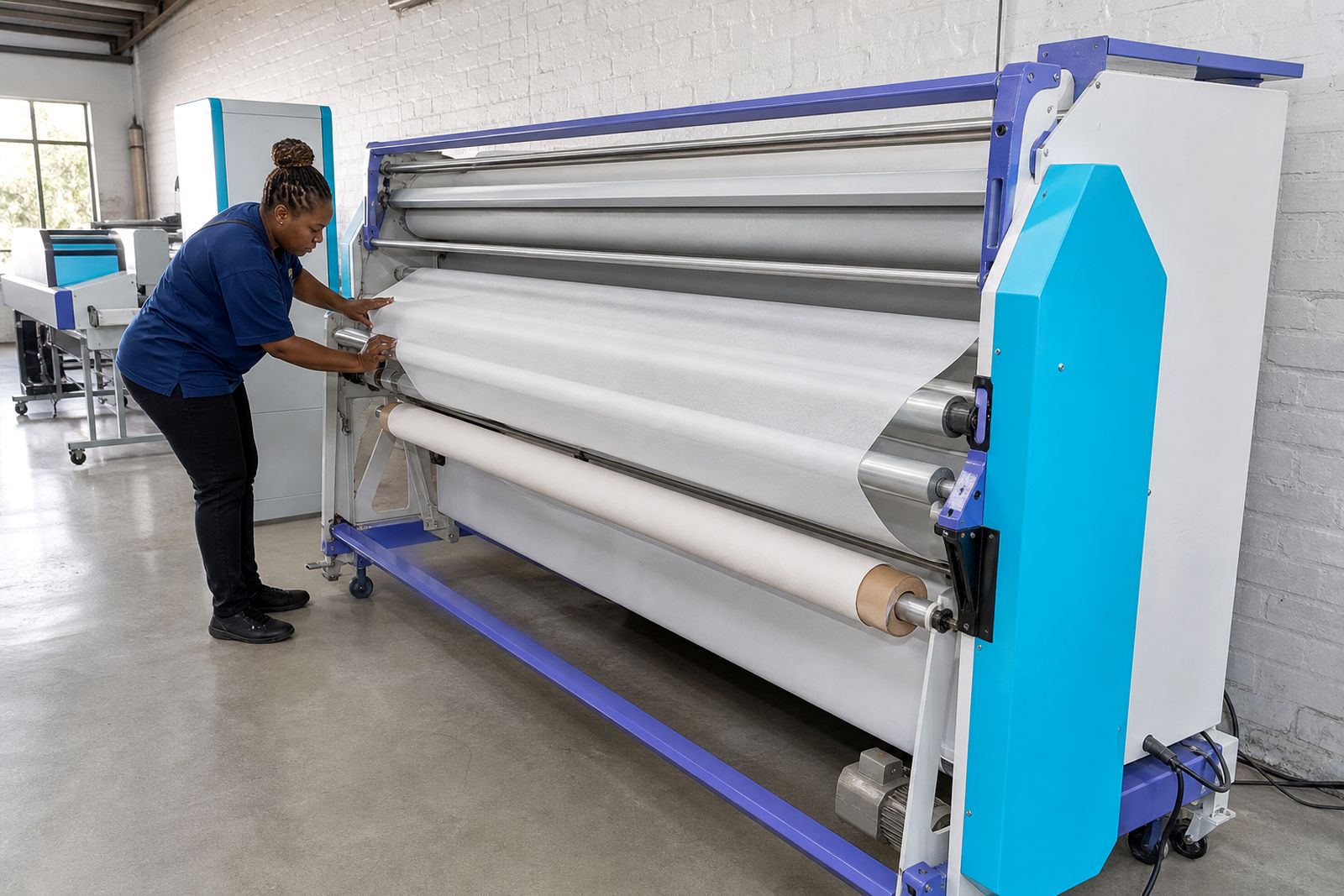
- Protective tissue roll suits continuous production where you want fresh paper moving through each cycle.
- Protective tissue is useful for catching loose dye, moisture and small amounts of blow-through.
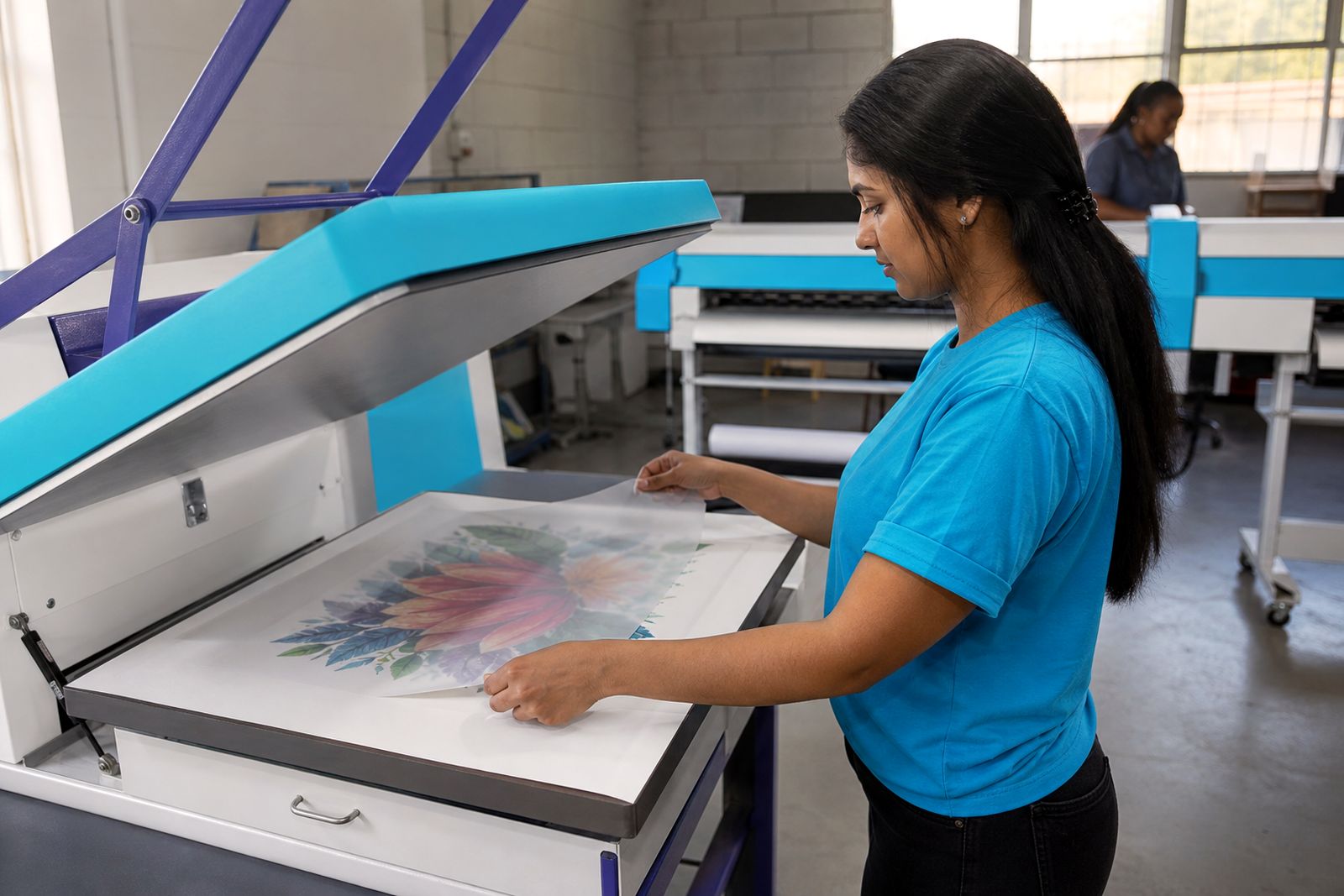
- Silicone release sheets suit repeat pressing where a smoother release surface helps separate layers cleanly.
- Silicone release sheets are handy for smaller setups, cut panels and repeated placement jobs.
For roll-fed workflow and longer lengths, tissue on a roll is often easier to manage. For station based pressing where operators use the same sheet many times, silicone release sheets can be the neater choice. If you are uncertain which route fits your setup, send the press size and material details through our contact form.
Matching the sheet to the fabric and ink load
Light fashion polyester, coated hard substrates and stretch textiles do not all behave the same under heat and pressure. A thin, stable protective layer is usually enough for ordinary garment panels with moderate coverage. For heavier saturation, longer dwell times or jobs that risk strike-through, a more absorbent sacrificial layer can help protect the lower surface better.
Stretch fabric needs extra care because movement after pressing can create a shadow image. In those jobs the transfer paper choice and the protective sheet choice work together. A stable top sheet and a clean lower layer help reduce the chance of the print shifting just enough to leave a faint duplicate line, which is the sort of fault you only notice once the panel cools.
Practical habits that save blankets and platens
Even good protective paper cannot fix a dirty press on its own. The best results come from replacing contaminated sheets early and keeping a separate stack for dark, heavy coverage work. Once stray dye builds up on a sheet it can transfer back in a later cycle, so trying to stretch use too far often costs more than it saves.
- Change the protective layer after obvious ink transfer or moisture build-up.
- Keep separate sheets for high-ink colours and for lighter production runs.
- Store sheets flat and dry so they feed and place evenly under the press.
- Trim badly creased edges away before use to avoid pressure lines.
- Check the press blanket often if you run full-bleed work or open weave fabric.
These small shop habits matter in Durban humidity and in inland winter conditions too, because moisture and static can affect paper handling in different ways.
Paper for production teams across South Africa
Our range covers sublimation paper, protective and release papers, and related consumables for businesses and creatives running their own output. We work from Pinetown and arrange courier delivery to Durban, Gauteng, the Western Cape and every other province. Whether you need sheets for smaller press work or rolls for wider production, we can point you to the right category.
For this section, the next step is choosing between protective tissue roll and silicone release sheets based on press size, usage pattern and how often you swap jobs during the day. Use our contact form if you want help matching the protective layer to your transfer paper, fabric type and press routine.
What our Sublimation customers say
Verified Google reviews
Questions we get asked
Do protective sheets stop ghosting completely?
They help reduce one of the common causes, especially stray ink and contamination on the press surfaces. Ghosting can also come from fabric movement, moisture, uneven pressure or lifting the transfer badly, so the protective sheet is one part of the process.
Can I reuse protective paper?
That depends on the material and how much ink it has picked up. Silicone release sheets are often used for repeated cycles, while tissue used as a sacrificial layer is usually changed more often once it shows dye, moisture or creasing.
Do you sell printers or offer sublimation printing?
No. We sell sublimation paper, protective and release papers, and related consumables for businesses and creatives who already handle their own printing and pressing.
Tell us about the job
Send sizes, materials and where you are through our contact form, and we will come back with the practical options.
Open the contact form