

Protective tissue roll
Protective tissue roll is a light cover paper used during sublimation pressing to catch stray ink and keep contact surfaces cleaner. It is commonly run on calender systems and used on flatbed presses where clean transfer conditions matter from one job to the next.
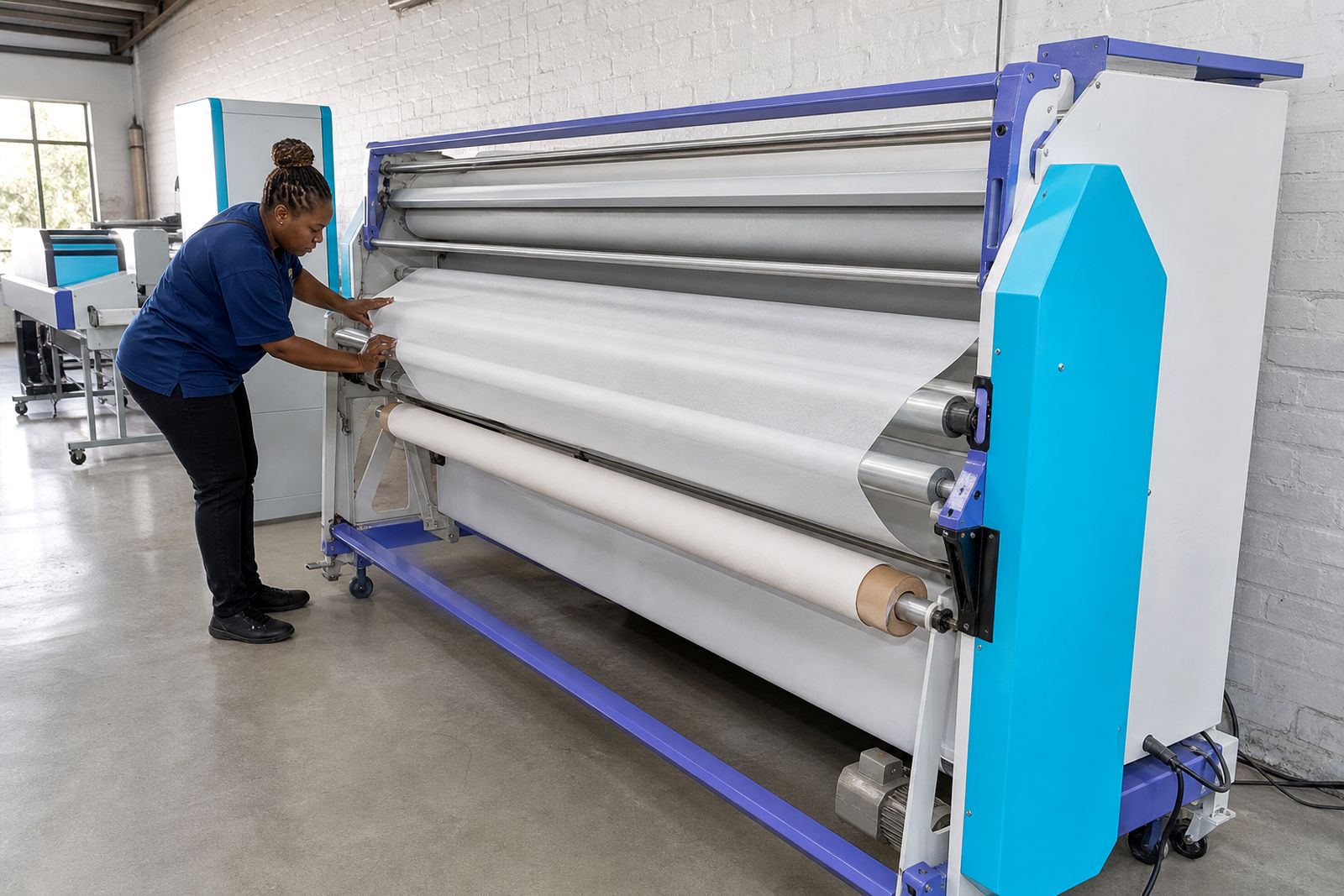
A light barrier between transfer and machine surfaces
This tissue is not transfer paper and it is not a release sheet. Its job is to sit in the press process as a sacrificial layer that catches loose dye, light strike-through and small amounts of contamination before that reaches blankets, belts or press platens. In a busy textile setup that matters because a marked blanket can carry colour into the next run, and even a faint line can show on pale polyester.
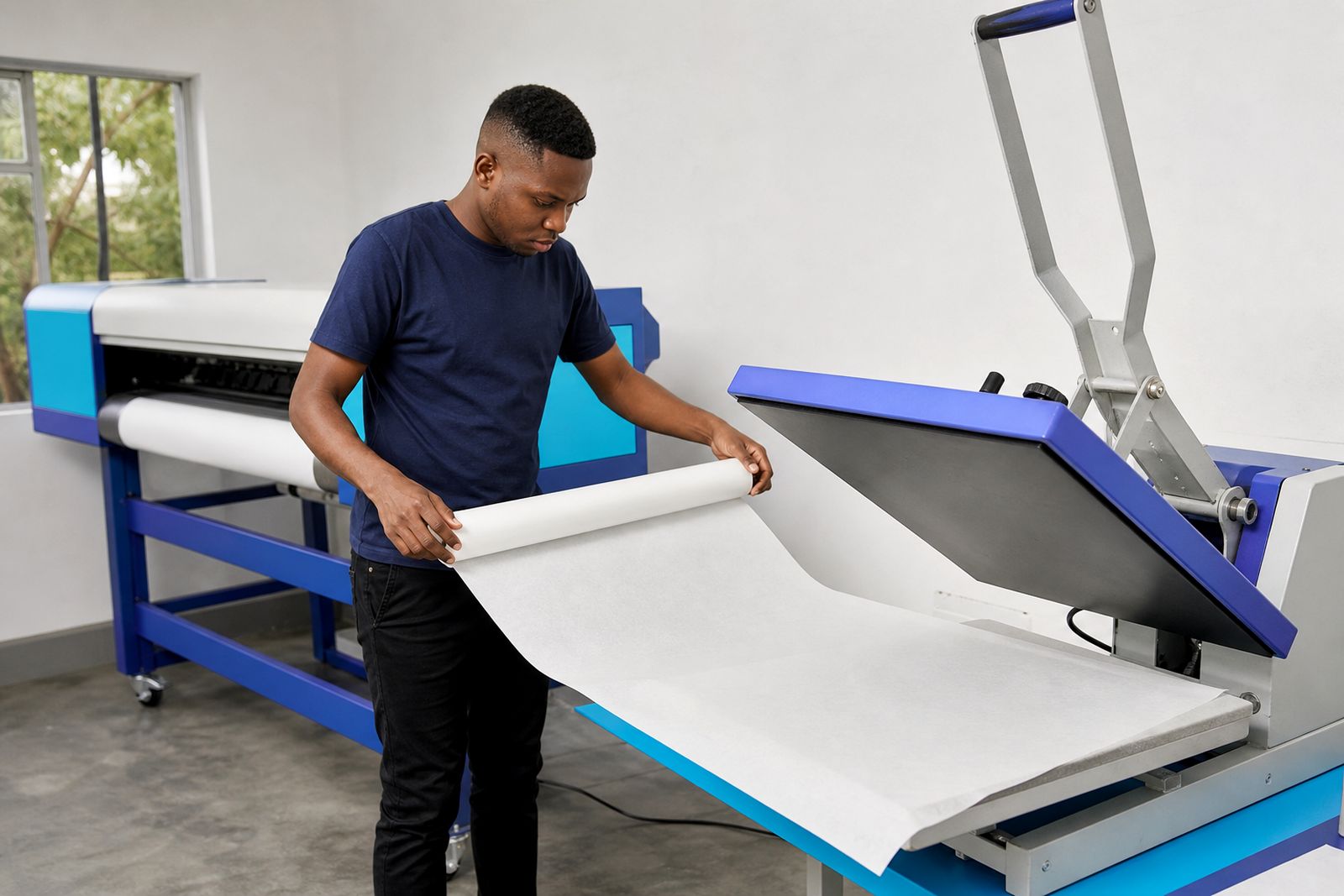
On calender work the tissue is usually fed in line with the printed transfer and fabric so that any excess dye has somewhere to go. On flatbed work it can be placed above or below the workpiece according to the pressing method and the paper path. The sheet is light, easy to handle and meant for routine replacement rather than long service life.
- Used to catch ink bleed during sublimation pressing.
- Helps reduce staining on blankets, belts and press surfaces.
- Suitable for continuous calender lines and flatbed press setups.
- Meant as a consumable layer, not a printable substrate.
Roll widths and the working limits that matter
The most useful choice is normally the roll width that covers your printed area with a bit of margin, without forcing the tissue to run out near the fabric edge. Width and roll length depend on the press layout you are running, so it helps to match the tissue to the calender face width or the flatbed platen size rather than guessing from artwork size alone.
Because this is a light tissue, it suits normal sublimation temperatures and continuous use where the web path is properly tensioned. It is not meant to act as a heavy cushioning layer and it should not be expected to correct tracking faults, blanket damage or poor pressure settings. If a line is badly over-inked the tissue will catch a lot, but saturation can still pass through if the wrong grade is chosen.
- Best matched to your usable press width, not just the nominal machine width.
- Allow side margin so drift at speed does not expose the blanket edge.
- Light tissue works well for bleed control but is not a pressure pad.
- For very heavy ink laydown or repeated strike-through, a different protective setup may be needed.
Where it suits the job, and where it does not
This roll suits soft signage, sportswear panels, fashion yardage and other polyester applications where transfer paper, fabric and heat are running close together for long lengths. It is also useful on flatbed presses for cut panels, sample runs and piece work where you want a fresh clean layer between jobs. In humid coastal conditions around Durban and Pinetown, keeping protective materials dry and wrapped helps them feed more consistently.
It does not replace silicone release media where a non-stick surface is specifically required, and it is not the right choice for wrapping mugs or rigid items. It also is not there to solve ghosting caused by movement, poor taping, airflow or lifting the transfer too early. Those problems need process changes rather than more tissue.
If you are pressing stretch fabric with tacky transfer paper, protective tissue can still form part of the stack, but the full layer order should be checked against the press method you use on site.
Running it on calenders and flatbed presses
Good results depend on straight loading and sensible tension. On a calender the tissue should unwind smoothly, track true and remain wide enough to protect the working area right across the repeat. If the roll is skewed on the shaft, or the brake is too tight, thin tissue can wander and wrinkle. Once that starts it can mark the job or leave unprotected lanes.
On flatbed presses the tissue should lie flat with no folded edges under the pressing area. Replace it when it becomes visibly marked, brittle or loaded with dye. A badly stained protective layer can transfer marks later, which defeats the point. Operators usually keep a clean section ready beside the press because once production starts you do not want to be cutting paper in a rush.
- Check shaft fit and unwind direction before starting a calender run.
- Keep the web centred and watch for edge curl or wrinkles.
- Trim damaged leading edges rather than feeding them into the nip.
- On flatbeds, use a fresh section whenever dye build-up is obvious.
Storage, handling and everyday care
Store tissue rolls sealed and off the floor in a dry room. Moisture pick-up can change the way light paper behaves, especially during colder mornings or muggy afternoons near the coast. Let the roll settle to room conditions before use if it has arrived from a colder route, that small step often prevents curl.
Keep dust, loose lint and spray adhesives away from the exposed roll edge. Contamination on a protective layer can print through under heat. When a roll is partly used, re-wrap it to avoid edge damage and workshop dirt. Do not compress rolls under other stock because flattened edges can feed unevenly and start tracking issues that look like a press fault.
What to send when you ask about a roll
To point you to the right size and quantity, send the practical details through our contact form rather than only the fabric type. A short note with your press setup saves time and helps avoid ordering a roll that is too narrow for the real working width.
- Whether you use a calender or flatbed press.
- Your usable press width or platen size in millimetres.
- Typical fabric type and whether jobs are continuous or cut pieces.
- Whether you need a single roll, regular monthly stock or mixed consumables.
- Your delivery town, such as Pinetown, Durban, Johannesburg, Cape Town or elsewhere.
If you are already using protective paper and want to change grade, mention what is happening now: edge wander, dye strike-through, frequent blanket marking or unnecessary waste. That gives us a clearer starting point than a width alone, and it helps if you note the roll core size used on your machine.
What our Sublimation customers say
Verified Google reviews
Questions we get asked
Is protective tissue the same as sublimation paper?
No. Sublimation paper carries the printed image, while protective tissue is there to catch excess dye and help keep machine contact surfaces cleaner during pressing.
Can I use it on a flatbed press?
Yes, provided the sheet size and layer order suit your press method. It is often used for cut panels and sample work where a clean sacrificial layer is needed.
Will this stop ghosting on its own?
Not by itself. It helps with bleed control and cleanliness, but ghosting is usually linked to movement, airflow, pressure or handling during the press cycle.
Also worth a look
Tell us about the job
Send sizes, materials and where you are through our contact form, and we will come back with the practical options.
Open the contact form