

Silicone release sheets
Silicone release sheets help keep a flatbed press clean while protecting printed work from ink offset and surface marking. They suit repeated press cycles on garments, panels and other delicate items where a plain paper barrier does not last long enough.
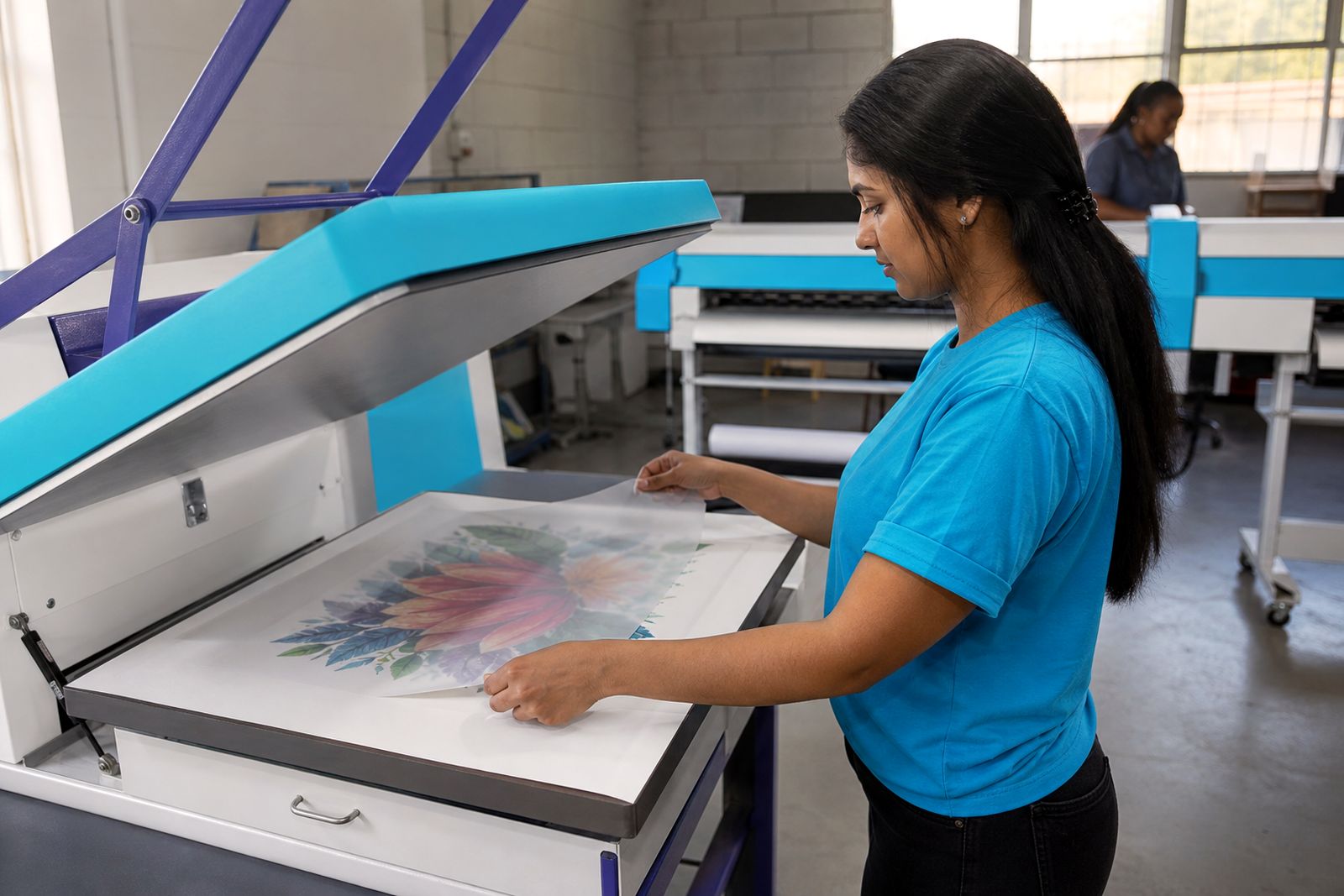
Built for repeat press work
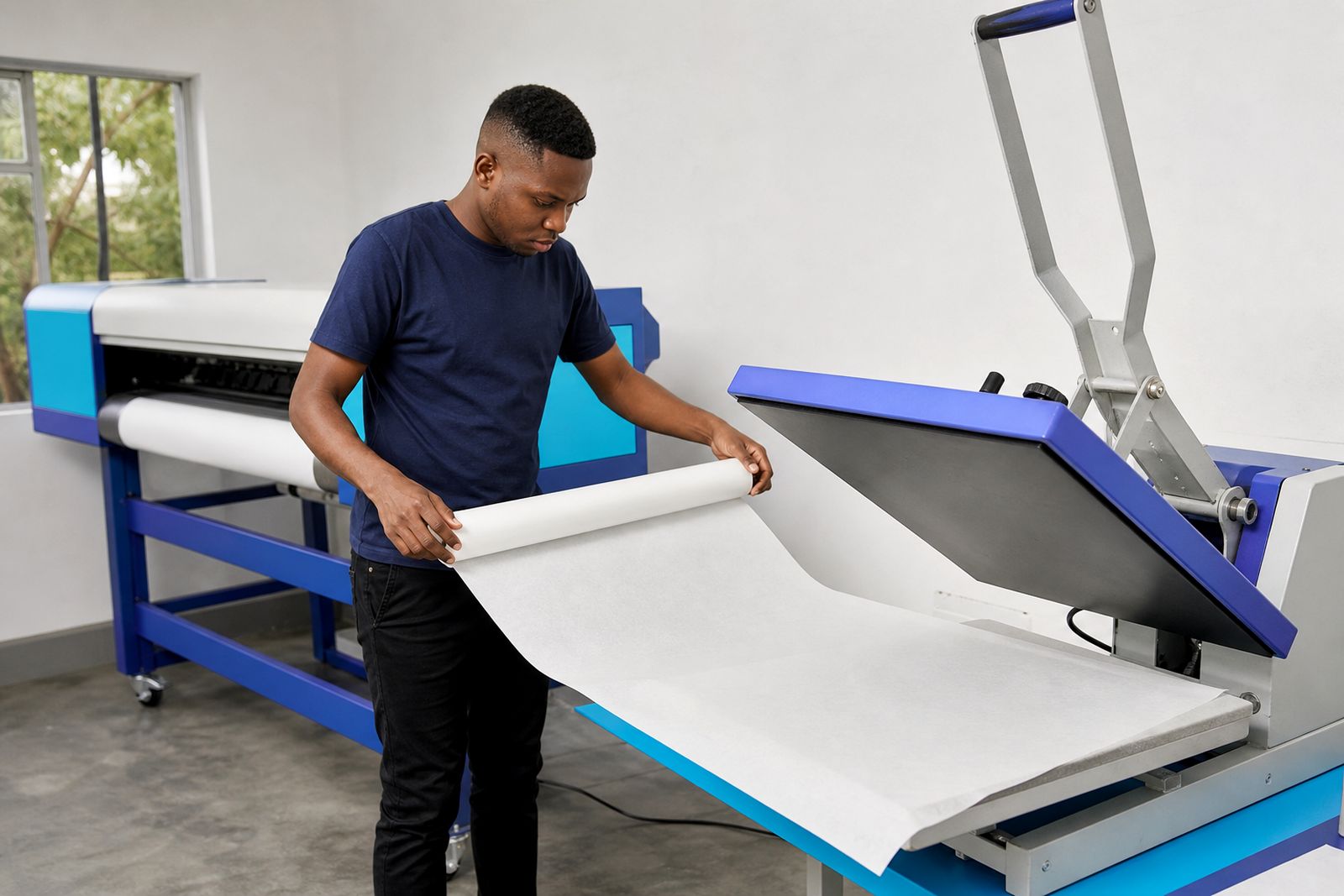
A silicone release sheet is a reusable barrier placed between the heated platen and the item being pressed, or between the lower bed and the item where needed. The silicone coating resists ink transfer and helps prevent stray dye, adhesive residue and lint from marking the next job. On busy production benches this matters a lot, especially when you are moving from light fabric to coated board or from one artwork run to another.
These sheets are mainly used on flatbed heat presses rather than rotary or calendar equipment. They are useful where the item surface marks easily, where there is a risk of blow-through, or where protective tissue would need replacing too often. In a humid coastal area like Durban, where paper can pick up moisture if left open, a reusable sheet also gives a more consistent contact layer for short and medium runs.
Sizes, thickness and working limits
We supply silicone release sheets in practical sizes for common flatbed press beds. If you run a non-standard bed size, tell us the pressing area in millimetres and we can point you to the nearest suitable sheet format. The sheet should cover the transfer area with enough margin that overspray or edge ink does not reach the platen.
- Typical sheet sizes include A4, A3 and larger flat press formats.
- Standard use is on flatbed presses for garments, mouse pads, coated panels and similar items.
- Working temperatures usually suit normal sublimation ranges of about 180 to 210 degrees Celsius.
- Press times depend on the blank and transfer paper, not on the release sheet alone.
- Repeated use is normal, but life shortens if the sheet is creased, cut or overheated.
Working limits still apply. A silicone release sheet is not a fix for uneven pressure, a damaged platen, poor paper choice or badly taped artwork. It should lie flat and clean on the press. If the sheet buckles, picks up heavy residue or has heat damage, replace it before it starts affecting transfer quality.
Where it suits, and where it does not
These sheets suit flat work where you want a smooth reusable barrier and less risk of offset. They are a good match for delicate coated items, light garments, stretch pieces that need careful handling and jobs where adhesive spray residue or loose dye may reach the upper platen. Some operators also keep one sheet for clean production and another for messy test work, which is a sensible shop habit.
- Suitable for flat garments and fabric panels.
- Useful on coated hard blanks with a mark-sensitive finish.
- Helpful for small repeat runs where protective paper waste adds up.
- Handy when pressing items that may release a little excess ink at the edges.
They do not suit every setup. For wrapped mugs, curved items or rotary equipment, use materials intended for that process. Where heavy blow-through is expected, a disposable protective layer may still be the better choice because you can remove contamination after each press cycle. If you need the paper to hold a stretchy textile steady during transfer, a tacky sublimation paper handles that job more directly than a release sheet.
Press setup and bench requirements
No special installation is needed, but the sheet does need a clean press and sensible bench handling. Wipe the platen before first use, check for adhesive build-up and make sure there are no sharp edges that could nick the sheet. Store the sheet flat when not in use. Hanging it over a chair, folding it into a drawer or trapping it under stock will shorten its life and can leave pressure marks.
For best results, keep a dedicated area near the press for clean release materials. Dust, lint and trimmed paper scraps easily transfer under heat. If your shop runs near an open roller door or receives a lot of workshop dust, cover the sheet between jobs. A dry shelf or flat file works well. There is no mains requirement attached to the sheet itself, but if load-shedding interrupts a heated press cycle, inspect the sheet before the next run in case the transfer shifted and contaminated the surface.
Cleaning, handling and replacement
After pressing, let the sheet cool before stacking it or wiping it down. Most residue can be removed with a soft dry cloth. If there is stubborn build-up, use a gentle cleaner that will not attack the coating, and test a corner first. Avoid abrasive pads, blades and harsh solvents. Once the coating is scratched the sheet can start carrying marks from one job to the next.
- Keep separate sheets for dark ink work and light-sensitive work if possible.
- Do not crease or fold the sheet for storage.
- Trimmed corners or cuts near the pressing area are a sign to replace it.
- Replace the sheet if ink staining transfers pressure marks onto finished items.
Many operators try to stretch sheet life too far. That often shows up as faint shadows, gloss patches or random contamination that wastes blanks. If a sheet no longer sits flat or clean, retire it. It saves trouble later even if the old one still looks almost usable.
Details to send with your enquiry
When you ask about silicone release sheets through our contact form, include the press bed size, the items you press most often and the temperature range you normally use. Also mention whether you need a reusable top sheet, a bottom protection layer, or both. That helps narrow the right format without a lot of guesswork.
If you are comparing release sheets with protective tissue or other barrier papers, say so in the message. We can then point you to the better fit for your production pattern. We do not print for the public and we do not sell printers, but we do help South African print rooms and creative workshops choose the right consumables for day to day transfer work.
- Press bed size in millimetres.
- Type of items pressed, such as fabric panels or coated boards.
- Usual temperature and dwell range.
- Whether ink offset, surface marking or residue is the main problem.
- Approximate quantity needed and delivery town.
What our Sublimation customers say
Verified Google reviews
Questions we get asked
Can silicone release sheets replace protective tissue on every job?
Not on every job. They are excellent for reusable flatbed protection, but disposable protective paper can be better where heavy ink blow-through or adhesive contamination needs a fresh barrier each cycle.
Will the sheet affect transfer colour or timing?
The sheet is there to protect the press and item surface, not to change the artwork. Colour and press time still depend on your transfer paper, blank, temperature, pressure and dwell settings.
How do I know when a sheet should be replaced?
Replace it when it no longer lies flat, has cuts or creases, shows heat damage or carries residue that starts leaving marks on finished work.
Also worth a look
Tell us about the job
Send sizes, materials and where you are through our contact form, and we will come back with the practical options.
Open the contact form