

Choosing sublimation paper weight
Paper weight changes how ink sits, dries and transfers under heat. The right gsm depends on your printer, your ink load and the fabric, panel or blank you are pressing onto.
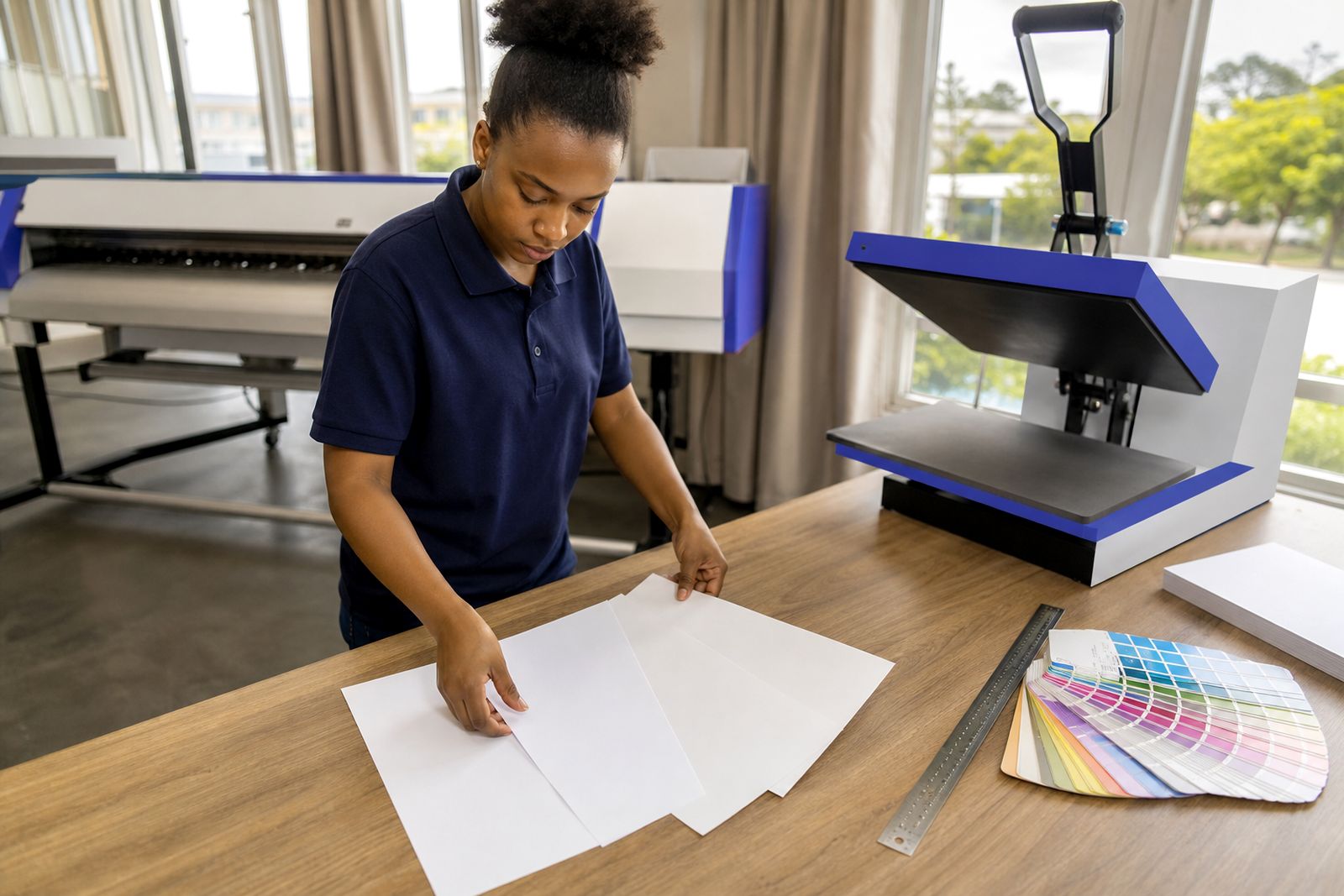
Start with ink load, not paper thickness
Many buying mistakes start with the idea that heavier paper must be better. In sublimation that is not always true. A lighter sheet or roll can work very well when the printer lays down a modest ink volume and the transfer goes onto a steady surface such as a coated panel, mug wrap system or standard polyester garment. Heavier grades help when ink coverage is higher, when solid blocks are common, or when the paper needs a bit more body through the print path.
Think about the artwork first. Fine line logos, technical drawings and small runs of light colour often suit a lighter gsm. Dense fashion prints, photographic work with large dark areas and jobs where the paper must stay flatter under heavier coverage may suit a heavier grade. If the paper is too light for the amount of ink you are laying down you may see cockling, waviness or less even release during transfer.
- Low to medium ink load: lighter gsm is often suitable.
- Medium to high ink load: move toward a heavier grade for better handling.
- Large solid areas: favour a paper that resists ripple during printing.
- Light text and sparse graphics: a lighter grade can be economical and clean.
How printer type affects the gsm you can run
Your printer matters just as much as the image. Desktop sheet-fed units usually handle a narrower range of paper thickness than wider production machines. Some feed systems prefer a sheet with enough stiffness to pick consistently, while others run best on lighter stock that bends easily around the path. With roll-fed equipment, stable winding and even take-up are important, especially on longer runs where humidity in Durban or the coast can start to influence paper behaviour.
If your printer tends to mark soft papers with feed rollers, a heavier grade may help. If it struggles to pull a stiff sheet through a tighter path, a lighter gsm can be the better choice. Always read your printer limits and then test inside that range rather than pushing to the top end just because the paper feels substantial in hand.
- Desktop sheet printers often need careful matching of stiffness and feed path.
- Wide-format roll printers usually benefit from paper stability over long runs.
- High-speed output can expose curl and tracking issues more quickly.
- Coastal humidity may change how a roll sits overnight in the machine.
Match the paper to the substrate you press
The transfer surface also guides the gsm choice. Hard substrates with coated faces, such as metal panels or rigid blanks, usually reward a paper that releases evenly and lies flat. Textile work can vary more. Standard polyester apparel often runs well on general-purpose papers, while stretch fabrics can call for tacky grades that hold position during transfer to reduce movement. In that case the coating type may matter more than gsm alone, but weight still plays a part in handling.
For soft signage and fashion panels with broad colour fields, a paper with more body can help maintain consistency from print to print. On lighter applications, especially short-run sheet work, a lower gsm may transfer perfectly well and reduce paper cost per job. The best choice is the one that supports accurate transfer without making the feed unstable or the drying stage troublesome.
If you are pressing onto more than one product category each week, it often makes sense to keep two paper weights on hand rather than force one stock across every job.
A practical gsm range for everyday work
For many sublimation setups, three bands are useful to think about. Around 100 gsm is a common all-round point for fast drying and general transfer work. It suits many wide-format jobs where the printer is balanced well and the artwork is not flooding the page with ink. Around 120 gsm starts to make sense when coverage rises, when the paper needs more firmness in handling, or when a longer print run benefits from extra stability.
Lighter sheet products can still have a place on compact printers and on short jobs where feed is reliable and transfer quality is proven. Heavier is not automatically safer. If drying is incomplete, or if your profile is built for a different coating, a heavier paper can leave you with slower production and no visible gain. Test for release, colour yield and flatness rather than judging by feel alone.
- About 100 gsm: general-purpose use, balanced ink loads, faster handling.
- About 120 gsm: heavier coverage, more body, useful on demanding graphics.
- Very light grades: best reserved for printers and jobs already proven with them.
- Tacky options: chosen mainly for fabric movement control, not only for weight.
Run a short test before settling on a stock
A small controlled test tells you more than any label on the carton. Print the same artwork on two likely paper weights, then transfer both under the same heat press settings. Compare colour strength, edge sharpness, drying, any cockling before pressing and how cleanly the paper lifts away afterwards. Keep room conditions steady while you do this, because damp storage or a very warm print room can skew the result.
Use artwork that reflects your actual work mix. A small logo sample will not tell you enough if your daily output is packed with deep navy backgrounds and skin tones. Likewise a full-bleed fashion pattern is not the best trial for a business that mainly prints branded mugs and plaques. A fair test mirrors the real job, not the easiest one in the file folder.
- Print the same file on each candidate paper.
- Keep colour settings and press settings unchanged.
- Check waviness, drying and feed behaviour before transfer.
- Compare release, sharpness and final colour after pressing.
- Store test sheets in the same room conditions before printing.
When to change weight instead of changing everything else
If colours look right but the paper ripples under heavy coverage, move up in gsm before you alter your whole profile set. If the transfer is crisp yet feeding feels stiff and awkward on a desktop printer, step down in weight before blaming the ink. Paper choice is often the neatest fix because it addresses the physical behaviour of the job without forcing major production changes.
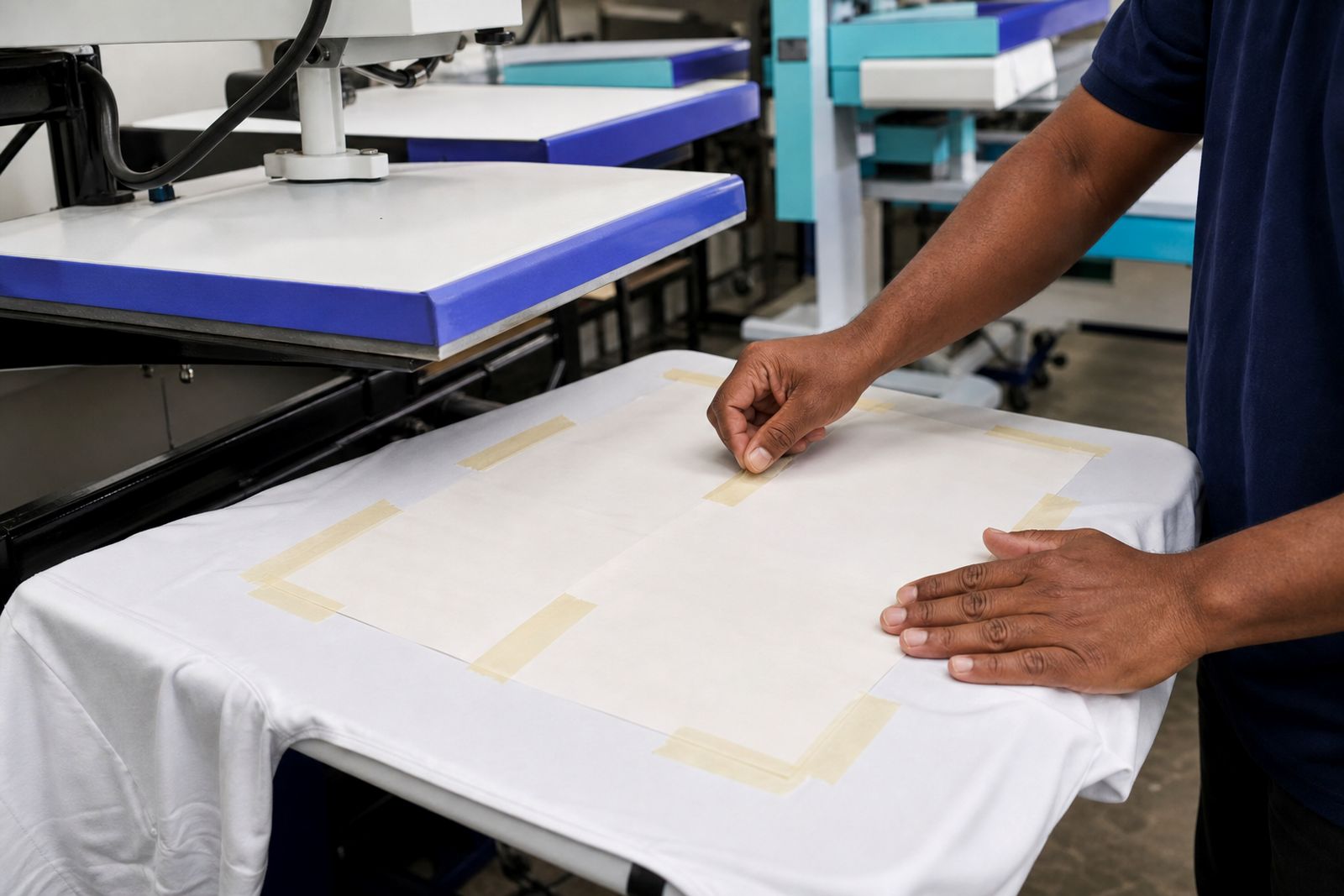
It is also worth separating gsm questions from coating questions. A ghosting problem may come from paper movement, poor tape placement or press handling rather than the paper being too light. A slow-drying print may be linked to coverage and room conditions not just the number on the label. Start with the symptom, then change one variable at a time. That saves stock and avoids chasing three causes at once.
If you need help narrowing the options across rolls, sheets or protective layers, send the job details through our contact form with your printer format, usual substrates and the kind of coverage you print most often.
What our Sublimation customers say
Verified Google reviews
Questions we get asked
Is 100 gsm enough for most sublimation work?
Often yes. A 100 gsm paper is a practical general-purpose point for many printers and standard ink loads, especially on roll-fed equipment and regular polyester work. If your files carry very dense coverage or the paper shows too much ripple, a heavier option may suit better.
Does heavier paper always give better colour?
No. Colour result depends on coating, profiling, drying and transfer settings as much as gsm. A heavier paper can improve handling on demanding jobs, but it does not automatically produce brighter output.
Should I use the same weight for hard substrates and fabric?
Not always. Hard substrates and standard textiles can often share a general-purpose paper, while stretch fabrics may need a tacky product to hold position during pressing. Many workshops keep more than one option for that reason.
Also worth a look
Tell us about the job
Send sizes, materials and where you are through our contact form, and we will come back with the practical options.
Open the contact form