

A3 sublimation sheets
A3 sublimation sheets give you more print area for medium-size textile and panel work without moving up to a roll-fed setup. They suit workshops that want tidy handling, consistent feeding and enough room for larger artwork blocks.
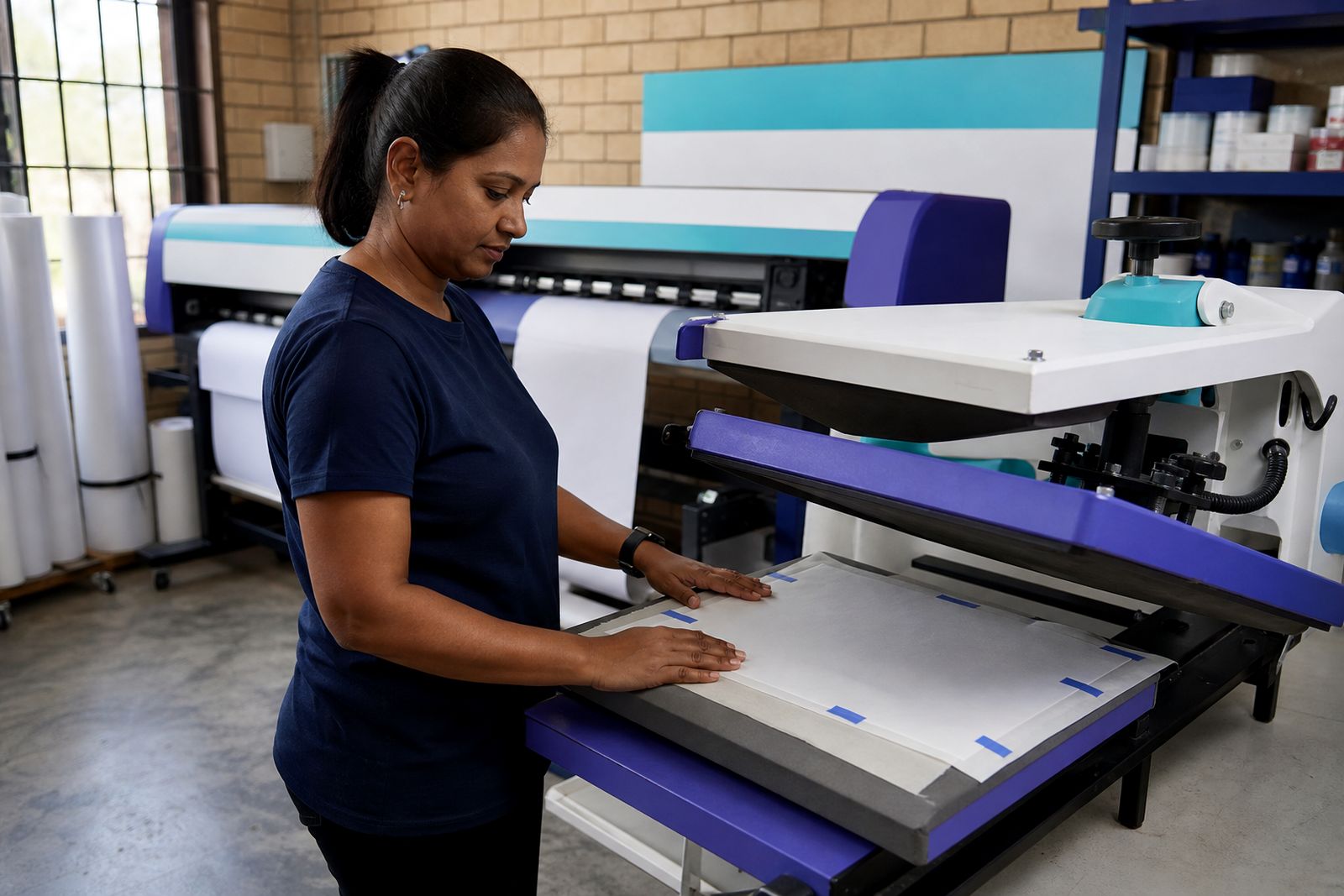
A3 sheets for larger transfer work
A3 sublimation sheets are cut sheets sized at 297 x 420 mm, giving noticeably more working area than A4 when you need broader layouts or fuller coverage. They are a practical choice for cushion cover faces, apron panels, larger garment fronts, tote bag panels and photo-style hard surface blanks that need one solid transfer rather than a tiled print.
For many small and mid-size production rooms A3 is the point where output becomes more flexible without bringing in roll handling, take-up space or sheet trimming at the press. You load the sheet, print the artwork, line it up on the item and press. That makes it useful where jobs change often through the day and operators need a format that is easy to stack, store and count.
- Sheet size: 297 x 420 mm
- Suited to medium panels and larger placement prints
- Works well where jobs are mixed and quantities vary
- Less setup than a roll for short-run work
Available options and where each one reaches its limit
A3 sheets are commonly chosen in fast-dry and heavier paper grades, with the final pick depending on ink load, transfer speed and the surface being pressed. A lighter fast-dry sheet is usually preferred for general textile output where the print must dry quickly after laying down colour. A heavier sheet can help when coverage is denser or when flatter handling at the press matters more.
The working limit of an A3 sheet is not only the physical page size. You also need to allow for printer margins, grip area and a little room for tape or positioning. On many jobs the usable image area ends up slightly smaller than the full 297 x 420 mm. If artwork runs too close to the edge you can see feed variation, corner lift or handling marks especially in humid Durban weather.
- Fast-dry grades suit everyday textile transfers and quicker sheet handling
- Heavier grades suit fuller coverage and flatter placement at the heat press
- Not ideal for extra-long repeats, continuous patterns or very large flag panels
- Allow for printer margins and press alignment before setting artwork size
Where A3 sheets fit well, and where they do not
This format suits workshops producing custom soft signage panels, décor pieces, promo textiles and branded cut panels in modest batch sizes. If you are printing cushion covers with a strong central graphic, apron fronts with a chest print or rigid insert panels for indoor display, A3 often lands in the sweet spot between convenience and coverage. It also helps when you want to separate jobs by stack, one design per sheet, without roll offcuts lying around the room.
There are limits. A3 sheets are not the right choice for long garment runs where a roll-fed setup would reduce loading time, and they are not a fix for very large all-over prints. If the artwork needs to wrap far beyond the edge of the blank, or the product shape is awkward and demands oversize bleed, a sheet format can become wasteful. They are also not a public printing service item. We sell the paper and related consumables for workshops and creatives running sublimation production.
Equipment, handling space and workshop conditions
A3 sheets need a printer that accepts A3 media and feeds cut sheets reliably, plus a heat press bed large enough for the blank and transfer to sit flat without the paper hanging over the pressing area. In practice that means checking both printer feed path and press platen size before ordering. A cramped feed tray, worn pickup rollers or a narrow press can turn a good paper choice into a frustrating job.
Storage matters as much as the machine setup. Keep sheets flat, dry and closed in their wrap until needed. In coastal humidity paper can absorb moisture, which may affect lay-flat performance and drying. Let stock settle in the workshop before use if it has travelled from a cooler area. A clean bench, careful sheet handling and steady room conditions help keep transfer results more consistent.
- A3-capable printer with dependable sheet feeding
- Heat press area large enough for the sheet and blank
- Flat, dry storage away from damp floors and direct sun
- Clean handling to avoid fingerprints, curl and edge damage
Day-to-day care and pressroom habits
Keep the pack sealed when not in use, and only take out what the shift needs. That reduces exposure to moisture and workshop dust. If corners start to curl, do not force the sheets through a difficult feed path. Sort the storage issue first, then test with a small batch before running a larger job. Good paper will still struggle if it has been left open near a roller door for days.
At the press, use suitable protective layers above or below the transfer where your process requires them, especially on items where ink strike-through can mark the platen or backing material. Match the paper choice to the fabric stretch, coating type and image density. A heavier saturated print can behave differently from a light logo panel, so the paper that works on one line may not be the best fit for another.
What to include when you ask about A3 sheets
When you send an enquiry through our contact form, include enough detail for us to point you to the right sheet grade and pack option. The main things are the product you are decorating, the printer paper size you run, the kind of ink coverage you expect and whether the job is a short custom batch or steadier production line. If you have had issues with ghosting, curl or damp stock mention that too because those details change the recommendation.
We cover Pinetown directly and arrange courier delivery to Durban, Gauteng, the Western Cape and the rest of South Africa. If your workshop is inland or on the coast it helps to say so, because storage conditions and handling can differ a bit between regions.
- Your required sheet size and preferred paper weight
- Textile or hard surface application
- Typical artwork coverage, light, medium or heavy
- Printer feed size and heat press platen size
- Approximate quantity needed
- Delivery town or province
What our Sublimation customers say
Verified Google reviews
Questions we get asked
Are A3 sublimation sheets better than A4 for fabric panels?
If the artwork needs more coverage or a broader layout, A3 usually makes positioning easier and reduces the need to split a design across multiple sheets.
Can I use A3 sheets for long production runs?
You can, but once volumes climb and designs repeat across longer panels, roll paper often becomes more efficient than loading individual cut sheets.
Do you sell printers with the paper?
No. We sell sublimation paper, protective and release papers, and related consumables rather than printers or public printing services.
Also worth a look
Tell us about the job
Send sizes, materials and where you are through our contact form, and we will come back with the practical options.
Open the contact form